A Coruna Spain is one of the quietest, least unknown big cities in Spain that many overlooks in their travels. It’s opposite all the most famous places, like Andalucia or Barcelona, and has a coast on the Atlantic Ocean. A Coruna Spain is right above the Portuguese border, but this city ticks every box you didn’t know you had. It’s not the sun-baked, paella-eating Spain of the postcards. It’s wilder, saltier, and infinitely more interesting, and also the surf capital of Spain (not literally but close to taking Mundaka’s throne). Interestingly, it also has the world’s oldest working lighthouse, guiding ships for about 2,000 years.
Check this article out, too: Day Trips From Malaga You Can’t Miss
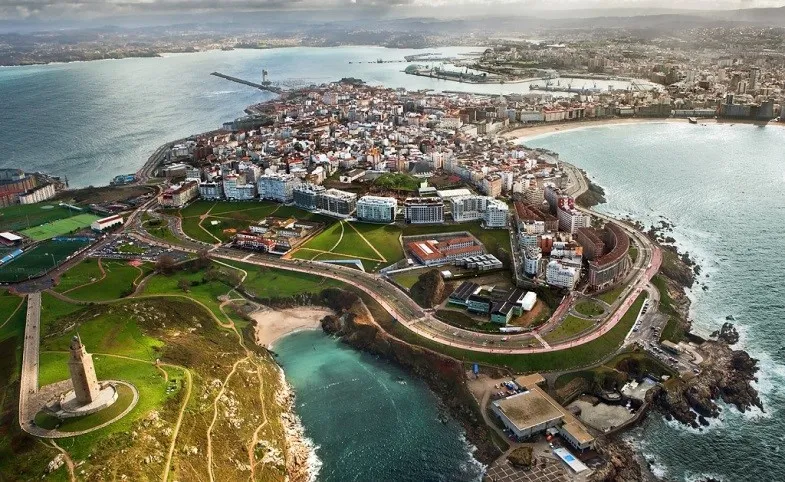
It’s in a unique location – more unique than an average Andalucian city (yes, like Malaga). Picture a city wrapped entirely around a peninsula (sort of like Peniche in Portugal), and the Atlantic Ocean is always close by. On one side, you have calm harbor waters with glass balconies overlooking it. On the other hand, crashing waves. It’s a place where you can surf before breakfast, climb the oldest working lighthouse in the world before lunch, and spend the evening hopping between tapas bars.
Between my surf posts in Portugal and a ton of articles on Andalucia (like Seville, Malaga, Cordoba, Jaen, Spain, and others), I thought it’d be worth talking about A Coruna, Spain. I will mostly focus on the surfing but will also deep dive into the culture, what to see, and whatever is important to see and do in A Coruna, Spain.
Fast Facts: Where Is A Coruna and How to Get There?
A Coruna is in the autonomous region of Galicia (like Andalucia), and it’s on the northwest coast of Spain. It’s somewhat secluded, a bit removed from the major hubs and transportation links, but that’s what makes it really cool. If you look at a map, it’s right up in that top left corner, sticking its chin out into the Atlantic. It’s the second-largest city in Galicia and feels more urban and coastal than its famous neighbor, Santiago de Compostela. Speaking of Santiago, it’s only about 55 km (34 miles) south, about a 30-minute train ride away from there, so it makes A Coruna the perfect coastal counterpoint of Santiago.
Getting to A Coruna
It feels like the edge of the world (and like I said), it does not connect very well with the rest of Spain, to its major hubs, but it’s still easier to get here than it may look. You essentially have three options, like any other area: train, car, and plane.
- By Train: There is a high-speed rail network to Galicia. You can catch a train from Madrid-Chamartín and arrive in A Coruna in under four hours. From Santiago de Compostela, it’s a quick 30-minute ride on the Avant or Media Distancia trains, which run frequently throughout the day.
- By Plane: The city has its own airport, A Coruna Airport (LCG) in Culleredo. You can technically fly here, but it only takes flights from limited cities like Madrid, Barcelona, London, Bilbao, and others (see the whole map here on flightconnections). If you are lucky enough to have a flight, this is the easiest. Alternatively, you can fly into Santiago-Rosalía de Castro Airport (SCQ) (check the whole map here), which has more international connections.
- By Car: If you’re road-tripping across Northern Spain, it’s fairly simple to reach A Coruna and the region. The A-6 motorway connects A Coruna to Madrid and the interior. There is also the AP-9 that runs north-south through Galicia, connecting Ferrol, A Coruna, Santiago, Pontevedra, and Vigo.
Getting Around A Coruna Spain
One of the best things about A Coruna Spain is its scale. It is incredibly walkable. The city center is on an isthmus (a narrow strip of land). You can walk from the harbor to the ocean beaches in about five minutes. For longer distances, like getting to the Tower of Hercules or Monte de San Pedro, the city has an excellent red bus network. You can also make use of the BiciCoruña bike-sharing system. But honestly, walking will get you to 90% of the places you want to go. I suggest doing that if you are fit enough.
Why Visit A Coruna Spain?
Before talking about certain things and showing you what to do in A Coruna Spain, it’s important to briefly mention why A Coruna is a good destination to visit. What can you expect? Does it match your expectations and what you want to do?
Atlantic City with a Beach Lifestyle and Surfing
A Coruna Spain is surrounded by Atlantic Ocean. It’s not a “city near a beach.” It was built around the ocean and beaches, so the culture and life here revolved around that, sort of like Ericeira in Portugal. In addition to the beach lifestyle (calm, not much happening, slow), this city has also become a surf hotspot lately. You’ll see locals in wetsuits running across the road with surfboards under their arms and surf camps with a ton of new (but respectful) tourists going at it on the nice surf beaches. There will also be retirees swimming their daily laps in the chilly ocean, and students playing volleyball on the sand. The ocean dictates the rhythm of life here, giving the city a relaxed, healthy energy that’s hard to resist.
History Meets Modern Life
A Coruna Spain has a long history and that history didn’t disappear (surprise, surprise!). It keeps that history intact, and you can see certain things in daily life, merged with the current, modern life. My favorite is the Tower of Hercules, the oldest working lighthouse and the only Roman lighthouse still in use today, also a UNESCO World Heritage site. Too many titles. A few kilometers away from this Tower, you have the headquarters of Inditex (Zara), one of the world’s biggest fashion companies, driving a modern, cosmopolitan economy.
Easy, Relaxed, and Underrated
If you find Barcelona too chaotic or San Sebastián too expensive, A Coruna is the sweet spot. It feels as authentic as it gets, like Jaen in Andalucia. You won’t get trapped in tourist queues or pay inflated prices for “paella” (which you shouldn’t eat here anyway). A Coruna doesn’t depend on the tourism economy as much, so the experiences aren’t shaped for that too much.
Essential Things to Do in A Coruna, Spain
A Coruna’s story is literally built on Roman stone. The oldest lighthouse I mentioned alone has witnessed two millennia of history. This kind of deep history affects the things to do in A Coruna Spain. Except for surfing and beaches, most other things to do here are historical sights, parks, or something connected to the history or culture.
Tower of Hercules and Sculpture Park
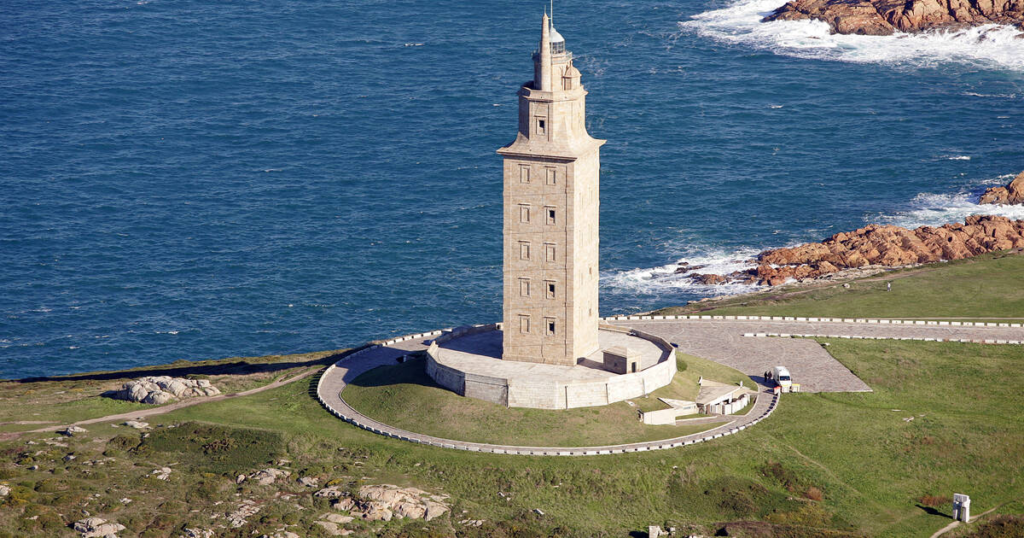
The Romans established the port of Brigantium in the 2nd century, and they constructed the Tower of Hercules to guide ships. This is the oldest working lighthouse in the world and a UNESCO World Heritage Site. The current look is from the last major restoration between 1788 and 1806. You cannot visit A Coruna without paying your respects to the Torre de Hércules. Once you are there, the fun thing is to climb the 234 steps to the top. As you make your way up, you can see the excavated Roman foundations. Surrounding the tower, there is a massive open-air Sculpture Park. It’s a wild, grassy space filled with modern stonework. It is about an hour’s walk from the central train station, and it’s great for a day’s trip.
Walk or Bike the Paseo Marítimo
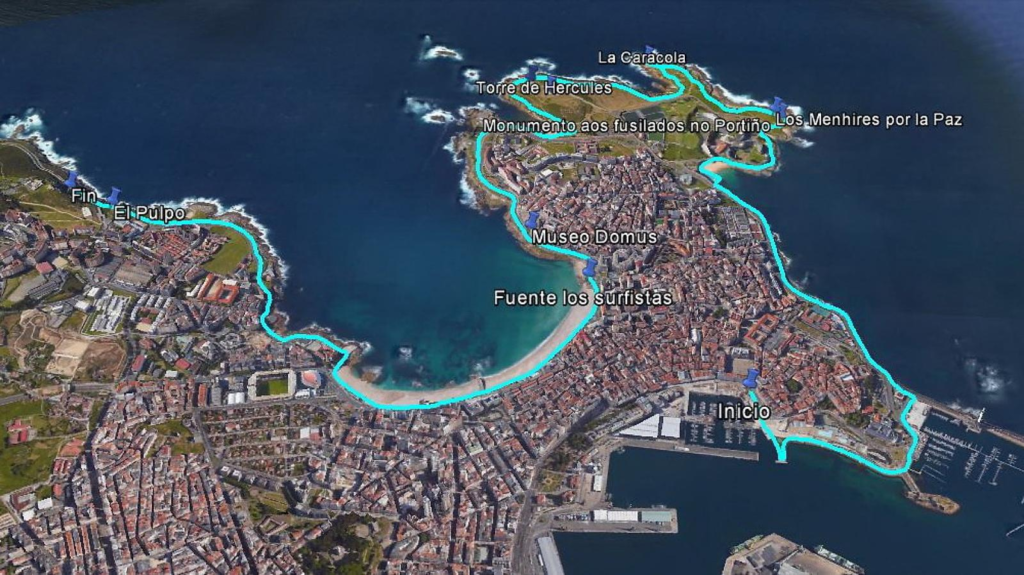
A Coruna has the longest seafront promenade in Europe, over 13 kilometers (8 miles). It wraps around the entire headland, sort of the city’s artery. It takes you past the marina, the castle, the lighthouse, the cliffs, and the beaches. You don’t have to do the whole thing (though it’s a great workout), but walking the section from the Tower of Hercules down to Riazor Beach is a must-do. I suggest renting a bike and doing the whole path on a bike. It’s a great exercise and experience. The distinct red lamp posts inspired by Art Nouveau can guide you the whole way.
Explore the Old Town (Ciudad Vieja)
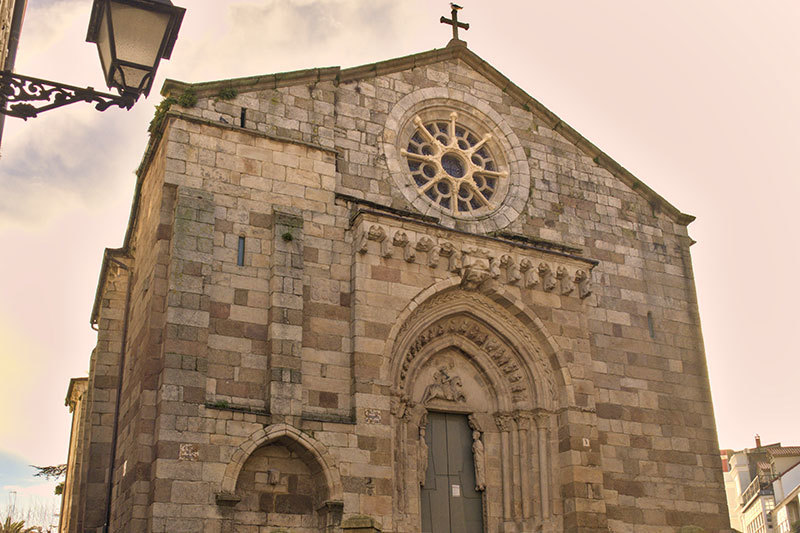
While the seafront is all about open space, the Ciudad Vieja (Old Town) is more inland and closer, smaller. It’s a maze of narrow, cobblestoned streets and leafy squares. Don’t check the map here, just walk around. It’s small anyway, you’ll finish almost all of it in a couple of hours of walking. In the Old Town, when you go past the Romanesque Church of Santiago, the oldest in the city, go into the Plaza de Azcárraga, a charming square surrounded by ancient trees. This walled garden has the tomb of Sir John Moore (a British general who died defending the city from Napoleon’s troops). It’s a quiet, romantic spot that many visitors miss.
Plaza de María Pita
This is the heart of the city, named after María Pita, a local hero who pushed the citizens to fight off an attack by Sir Francis Drake in 1589. The architecture here is stunning. You’ll see a lot of glass-enclosed balconies that protect the houses from the rain and wind. This unique feature is why A Coruna is often called the “City of Glass.”
Castle of San Antón and the Waterfront Museums
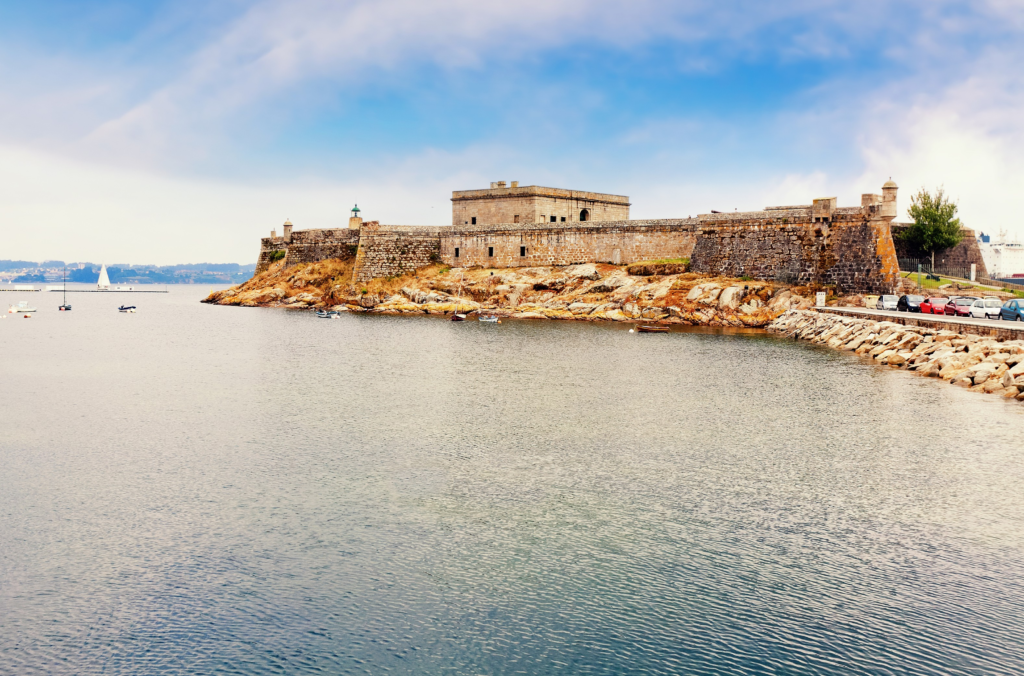
The Castle of San Anton was originally on a small island near the mainland. Over time, it got connected to the mainland, so now you can reach it anytime. It was originally built as a fortress and a prison but now it’s the Archaeological and History Museum. It’s small, fascinating, and offers great views back towards the city. Good visit for half a day. If you have kids or just a curious mind, the waterfront museums are excellent. The Domus is the world’s first interactive museum dedicated to the human body in a striking building designed by Arata Isozaki. Further along, the Aquarium Finisterrae focuses on the Atlantic ecosystem, complete with an outdoor seal colony.
Estrella Galicia and MEGA Beer Museum
You will see the Estrella Galicia logo everywhere. Yes, it’s a Spanish beer born in A Coruna in 1906, and locals are fiercely proud of it. You can visit MEGA (Mundo Estrella Galicia), a museum for the brand. It’s not just a traditional beer factory tour. They show you everything, an interactive experience where you can touch the ingredients, learn about the brewing process, and learn how to pour the perfect draft beer (caña) with a tasting session. Even if you aren’t a huge beer nerd, it’s a fun, high-quality experience.
Surfing and Beaches in A Coruna
A Coruna is one of the few European cities where you can leave the office and be in the lineup in ten minutes. A few that come to my mind are Ericeira, Peniche, and Sagres. The surf culture here is woven into the city’s fabric, and you must try surfing while you are here. I suggest a surf camp that can be about a week if you’ve never surfed. It’s the best experience ever. Let me give a small rundown of the beaches and the surfing culture in A Coruna Spain.
Riazor and Orzán: City Beaches
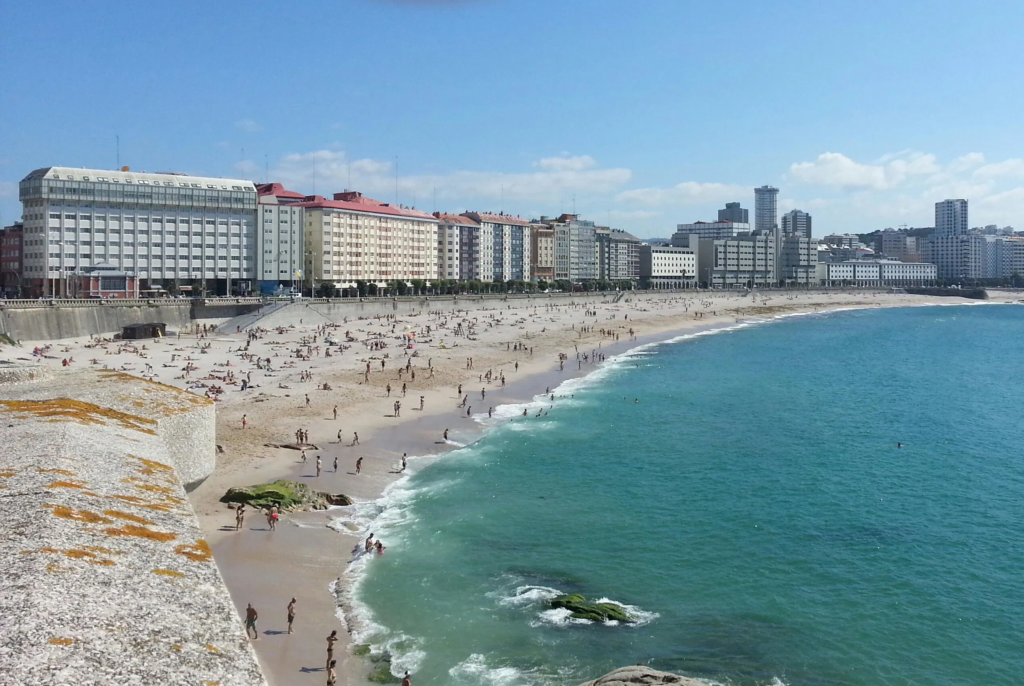
These two beaches form a continuous curve of golden sand, separated only by a rocky breakwater. Riazor and Orzán are a spectacular twin beach complex. Their golden sands attract both sun-seekers and surfers throughout the year. Locals use these urban beaches for morning jogs along the water’s edge. Families build sandcastles while surfers catch waves. You can do almost everything. Not the best for surfing, though, it can get crowded.
- Riazor: This is the southern end, closer to the stadium. It’s generally a bit more sheltered and is the go-to spot for sunbathing, swimming, and beach volleyball. The curve of the bay makes it incredibly great for Instagram stories and to enjoy the sunset.
- Orzán: The northern section is more exposed to the open ocean. It’s wilder, steeped, and often has stronger currents. This is where most surfers will try the waves.
Surfing A Coruña
Surfing here is accessible and consistent. Riazor and Orzán work best on small to medium swells. When winter comes, the bay can close out, but for most of the year, it offers fun, rideable waves. If you’re a beginner, this is a fantastic place to learn. There are several surf schools located in the area. If you know how to surf, you can rent a board and a wetsuit for a few hours without any hassle there, as well. Just be aware that the water is fresh. You’ll want a 4/3mm wetsuit for most of the year, maybe dropping to a 3/2mm in the height of summer if you’re hardy.
Other Water and Coastal Activities
If surfing isn’t your thing, you can still get out on the water. On calm days, stand-up paddleboarding (SUP) is huge here. Paddling around the calm waters near the Castle of San Antón is quite fun. You can also find boat tours departing from the marina that cruise out to the Tower of Hercules. Some other options:
- Coasteering: Go to Arteixo or the Costa da Morte for coasteering tours. You’ll scramble over rocks, jump off cliffs into the sea, and explore caves that are only accessible from the water.
- Sea Kayaking: For a slightly more controlled adventure, kayak tours operate along the coast. It’s a great way to see the sheer scale of the cliffs and reach secluded coves that hikers can’t get to.
Nature, Viewpoints, and Extreme Sports
It’s not just pretty beaches, surfing, water activities, food, and cobble streets. There are more things to do in A Coruna Spain. Especially nature and viewpoints are super fun. You can connect with nature easily here.
Monte de San Pedro
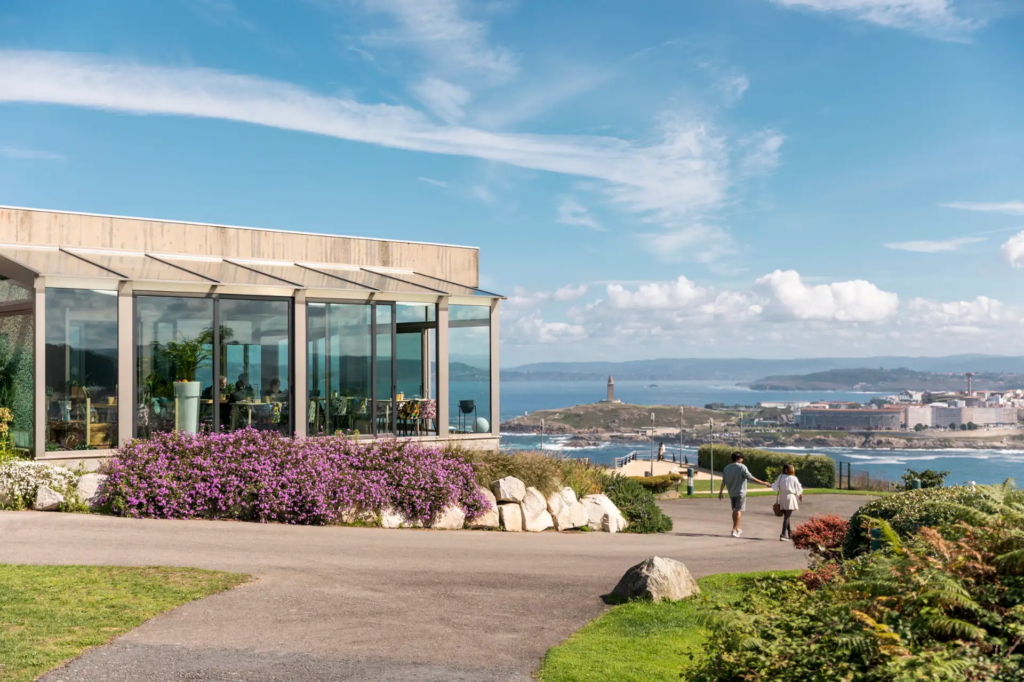
For the best view in the city, Monte de San Pedro should be your go-to. This was once a defensive military battery, and huge, imposing cannons still point out to sea. Now, it’s a beautiful park with a maze, a duck pond, and endless grass. To get there, you can take the spherical glass elevator (Ascensor Panorámico) that climbs the cliff face. It’s the perfect spot for a romantic picnic with a view.
Beach-to-Beach Coastal Strolls
Like Paseo Maritimo walk, you can walk from beach to beach as well. It’s on the same walking path but in a different area than what I mentioned before. You can walk from Playa de San Amaro (a quiet beach near the Tower) all the way to the end of Riazor without ever leaving the coast. It’s a flat, easy route that takes you past surfers, sculptures, and rock pools. Rent a bike and do the whole loop if you want to see it all in an hour.
San Carlos Gardens and Méndez Núñez Garden Spots
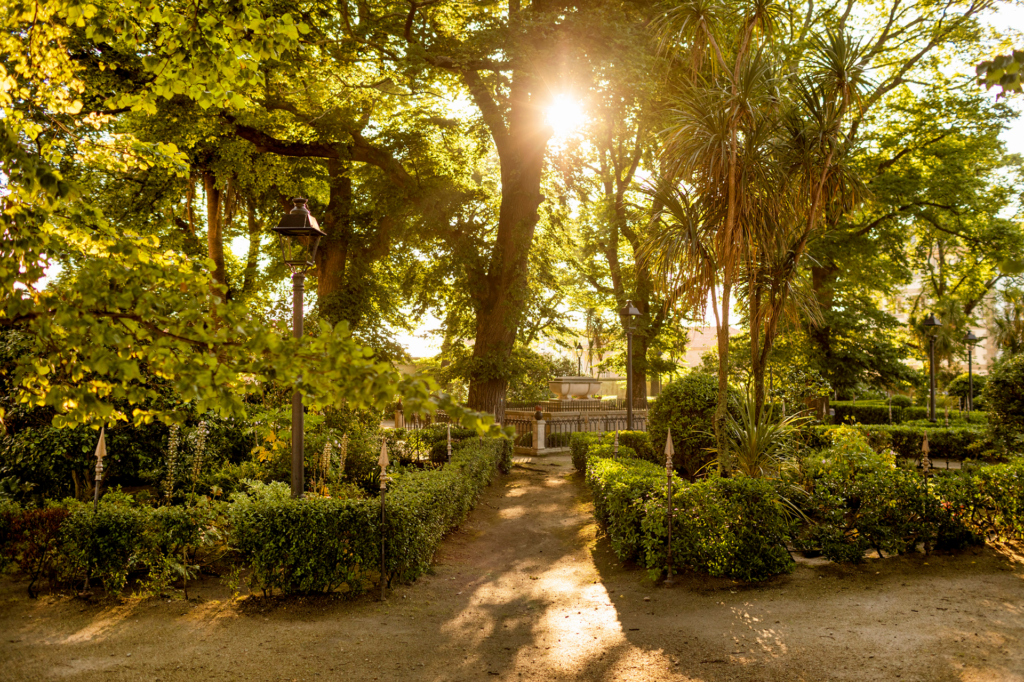
There is also a set of gardens in one area, called San Carlos Gardens. They are great for walks, picnics, or simply enjoying the view. They become even better at sunset. Méndez Núñez Garden sits right in the heart of the city, it’s easy to reach here and enjoy it during the day, morning, or evening. The garden features the quirky Kiosko Alfonso. This exhibition center once operated as a unique cinema. Patrons paid different prices depending on which side of the screen they watched movies from.
Best Day Trips from A Coruna
The wider Galicia region is a really nice area to spend some time in. If you are staying in A Coruna Spain for a longer time, you should do day trips from A Coruna. The city is small, so you will definitely have the time to see other areas after you finish A Coruna. Because A Coruna is so well-connected, it makes a brilliant base for exploring the wider region. Here are three trips that offer completely different vibes.
Santiago de Compostela
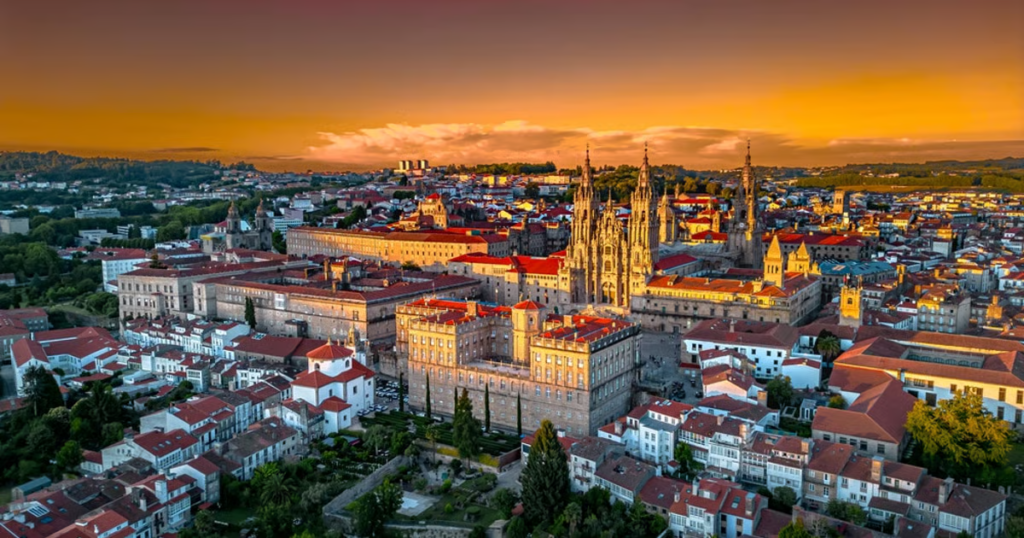
You can’t come to Galicia and not see Santiago. Even if you aren’t walking the Camino (it’s the endpoint of the Camino), the energy of the place is undeniable. Hop on the train, and in 30 minutes, you’ll be walking into the Plaza del Obradoiro. Watch the pilgrims arrive, exhausted and emotional, dropping their backpacks in front of the cathedral. Eat a slice of Tarta de Santiago (almond cake), and explore the massive cathedral. It’s easily doable as a half-day trip, leaving you time to get back to A Coruna for dinner.
Costa da Morte & Finisterre (The End of the World)
Rent a car and head west. The Costa da Morte (Coast of Death) gets its name from the hundreds of shipwrecks on its treacherous, rocky shores. After that, drive to Cape Finisterre (Fisterra). For the Romans, this was the literal end of the known world (Finis Terrae). If you know Sagres in Portugal, that’s the other side of the end of the world. Same story but different people. Watching the sun sink into the Atlantic from the lighthouse here is a bucket-list experience. On the way, stop at Muxía to see the sanctuary of Virxe da Barca, where they say stones have healing powers.

Betanzos (Medieval Streets & Famous Tortilla)
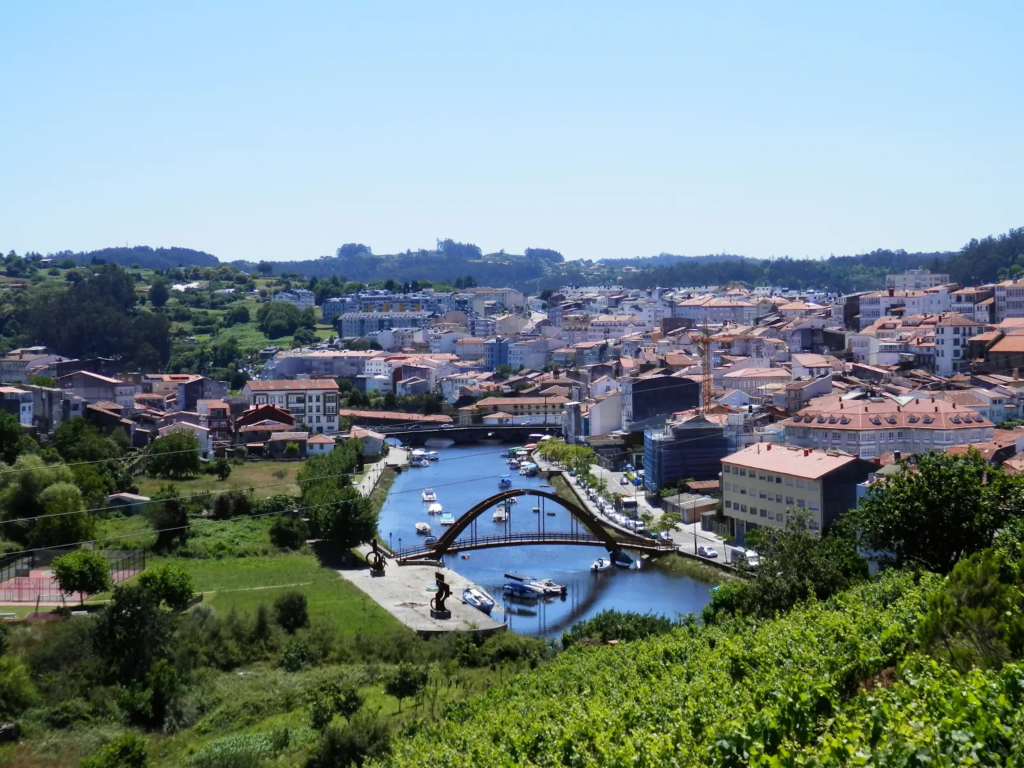
Just 25 minutes inland, there is Betanzos, one of the old capitals of the Kingdom of Galicia. It’s a stunning medieval town with three Gothic churches and ancient city gates. It’s nice and all for history, but they have a famous omelet for some reason. The Tortilla de Betanzos is legendary in Spain. It is made with eggs, potatoes, oil, and salt. That’s it. No onions. And it is runny, very runny. When you cut it, the egg yolk spills out like a sauce. It’s incredibly rich and delicious. Head to a local tavern, order a slice, and judge it for yourself.
Conclusion
A Coruna Spain is a destination that many tourists that go to Spain overlooks. Sure, Barcelona, Granada, Seville, and Madrid are all amazing and are the highlights. However, North Spain is always a different monster, and A Coruna is not an exception. You can surf, walk from one beach to another (or the whole promenade), have great and different food, stay somewhere where mass tourism hasn’t ruined it, and be together with the local culture.
The biggest part, and the reason why people visit A Coruna and the surrounding area, is surfing. The whole northwest peninsula of Spain is great for surfing. When surfing gets boring or you are tired, you can go inland for day trips. Santiago is your big city in the region with a ton of cool stuff. A Coruna also has the world’s oldest lighthouse that’s still in use. So history is not missing! Overall, you can stay for three days, a week, or even longer, and you will thoroughly enjoy your time. If Spain’s on your destination list for your next trip, consider A Coruna and the northwestern part of Spain.
FAQ
What is the best way to get to A Coruna from Santiago de Compostela?
The most convenient way is by bus or train, both offering regular services that connect the two cities in about an hour. The journey through the Galician landscape is scenic and straightforward.
What are the main beaches in A Coruna, and are they good for swimming?
Riazor and Orzán beaches are the most popular. They are next to each other in the city center. They have golden sand, great waves for surfing, and are well-maintained, though the water can be cool.
What makes A Coruna’s architecture special?
A> The city is often called the “City of Glass” due to its characteristic enclosed glass balconies, called *galerías*. These, combined with modernist buildings along the seafront, create a distinctive and elegant urban design.
Are there good day trip options from A Coruna?
Yes. A trip to the historic and spiritual Santiago de Compostela is a must. Towns like Betanzos are also easily accessible by train or bus.
What is the best time to visit A Coruna Spain?
The summer months, from June to September, have the warmest and sunniest days, perfect for enjoying the beaches and outdoors. The climate is generally mild year-round, but spring and autumn can be less crowded.