Valencia is one of Spain’s best and easiest cities to enjoy for everyone: on a budget, as a family, couple, or backpacker. You can explore the historic center, relax on Mediterranean beaches, eat authentic paella, and take day trips without Barcelona-level prices. I have curated this quick guide for the best things to do in Valencia, Spain, based on my experiences, which I believe is one of the best ways to enjoy Valencia. From seeing local neighborhoods to free activities, Valencia attractions that are worth the time, and wine tasting in Requena.
I first found myself researching Valencia while on a road trip from Malaga to Alicante, around Andalucia’s beautiful cities. I ended up going to Valencia at a later time, but the research stuck with me, and it was impossible to just pick what I wanted to do in Valencia. Should I visit museums, hike, take a day trip, or just enjoy paella? There are too many options, and this is why I am writing this article. It’s somewhat similar for other big cities in Spain, like Malaga, Granada, Seville, Barcelona, and so on.
This guide will be helpful if you are in the same position and feeling overwhelmed, or just exploring options for your next holiday. I am not promising “hidden gems” or stuff you can’t find anywhere. I narrowed down the list of things to do in Valencia Spain to make things easier for you.
Quick List: 10 Best Things to do in Valencia
This is a very short recap of the activities in Valencia that I will mention below. There will be more, this is just the list of things to do.
- Explore El Carmen’s medieval lanes and street art
- Visit the City of Arts and Sciences
- Walk or cycle through the famous Gardens like Jardin or Hesperides
- See Valencia Cathedral and climb El Micalet
- Browse the small markets (and Central Market, too)
- Watch the Water Court on Thursday
- Visit San Nicolás Church
- Spend an afternoon in Cabanyal
- Choose Patacona over busy Malvarrosa
- Take a sunset trip to Albufera
Best Things to Do in Valencia
There are many activities to do and attractions to see in Valencia, as I said. Which ones to start with? Or which ones are the “best” ones? Should you sit at a restaurant in El Carmen or see the Cat House, tiny buildings, San Nicolas? Or, which old villages of Valencia should you visit? See what I mean? This is my opinionated list of things to do in Valencia, and I will explain each one.
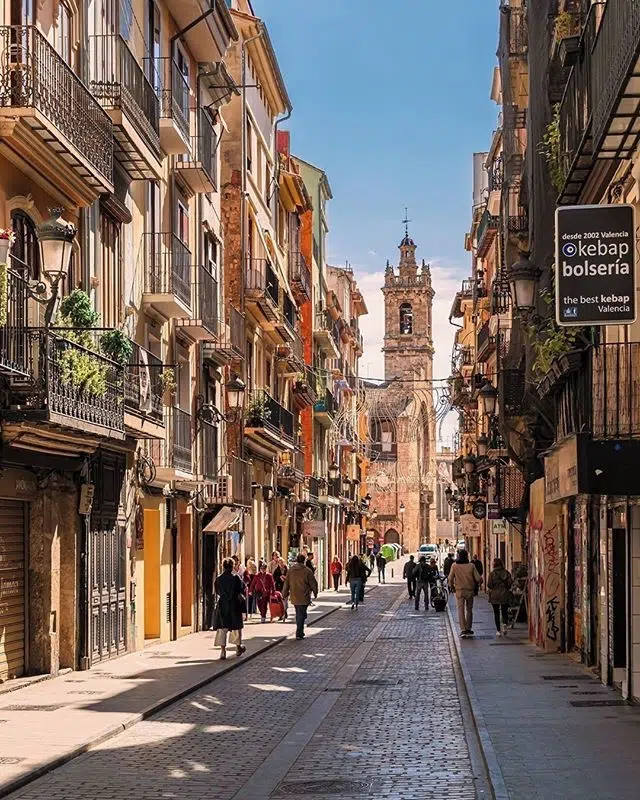
Visit El Carmen: Valencia’s downtown.
Like many Spanish cities, downtown Valencia is where you will start, and it’s worth it. It’s a small area, you can walk everywhere, but what is there to see here? There is a rich history here dating back to Roman times. You will feel and see it.
- Valencia’s Tiniest Buildings: In a garden wall on Carrer del Museu in El Carmen, there is a miniature three-story villa called Casa de los Gatos, or the Cat House. A local craftsman built this house in 2003 as a tribute to Valencia’s street cats, complete with a tiny tiled roof and a little balcony.
- La Estrecha: Once you go past the Cat House, just around the corner, there’s La Estrecha. It was once a standalone family home that’s only 107 centimeters wide. The original iron balconies and emerald-green facade are still there, even though the inside now connects to the tapas bar next door. Both are free to see, and if you have kids, you can make a scavenger hunt out of it.
- San Nicolás Church: Church of San Nicolás looks like another plain, crumbling church from the outside. But inside is a 2,000 square meters of Baroque frescoes that were fully restored in 2016. Some say that it is as beautiful as the Sistine Chapel’s ceiling in Rome. The entry ticket is about 16 euros with an audio guide, and 13 euros for discounted tickets. I think it’s quite expensive for what it is.
- Café Sant Jaume’s Historic Apothecary Bar: This spot was a pharmacy in 1839, and it still has the original marble counters, dark wood cabinets, and glass medicine jars lining the walls. Now it’s an atmospheric bar. One of the best places to get Agua de Valencia, the city’s signature cocktail made with cava, orange juice, gin, and vodka. It’s expensive, though. A drink here could cost about 8 to 10 euros.
Watch The Water Court: Europe’s Oldest Living Tradition
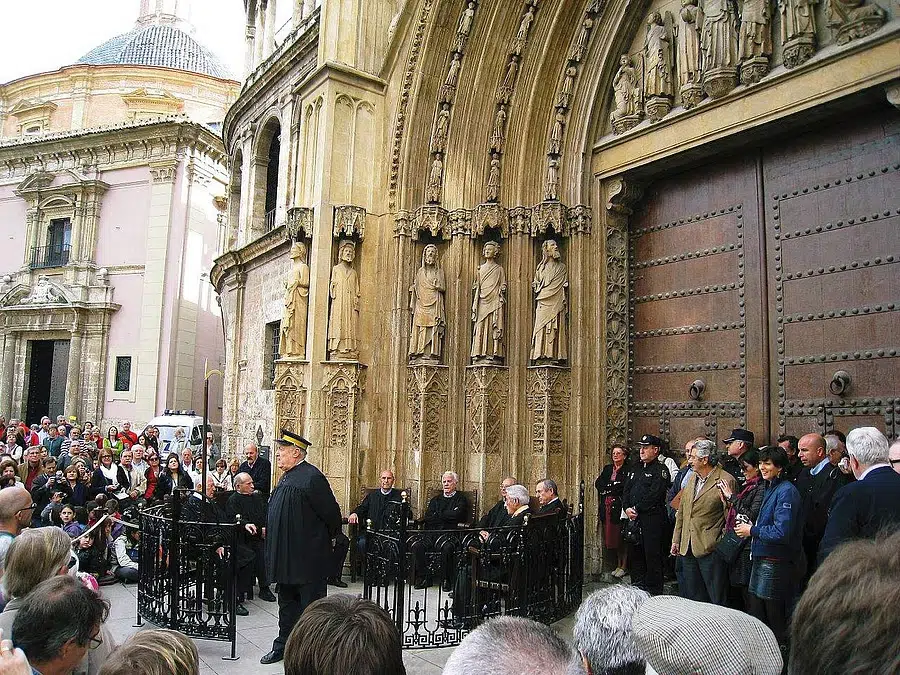
This really is a “hidden gem”, I haven’t seen this in many places on the internet. It’s not a museum, an attraction, or an exhibit; it’s a court that is still active, and it’s been going on for the past 1,000 years. The Tribunal de las Aguas, or Water Court, is the oldest active judicial institution in Europe, and it’s been settling irrigation disputes between local farmers the same way for over 1,000 years. You may even watch a court case if you want.
Every Thursday at noon, eight farmers dressed in black robes sit on wooden chairs at the Apostles’ Door on the side of the Cathedral. There are no lawyers, no written records, and no appeals. Whatever they decide out loud, right there in public, is final. It’s free to watch, takes about 20 to 30 minutes, depending on how many disputes come up that week. You need to speak Spanish, though!
See Valencia’s Forgotten Old Villages
Valencia was not as big a city as it was in old times. The city’s downtown was the actual city, and there wasn’t much outside, just a few rural villages. As the city grew, it grew by swallowing up a bunch of those small rural villages that used to sit outside the city entirely. A lot of them still feel like their own little towns. You can reach them by city bus or a 20-minute bike ride from the center.
- Campanar: Campanar is across the old Turia riverbed, not so far off to reach, and it still feels like its own village. Not too touristy, either. There’s a quiet church square, old two-story houses, and there is no tourist infrastructure you’d find in the center. Locals recommend just walking around here for an hour; it’s one of the few places in Valencia where there are not many tourists.
- Benimaclet’s Community Gardens and Student Vibe: Benimaclet is Valencia’s unofficial student and artist neighborhood, and it has a bohemian energy that El Carmen has started to lose to tourism. Look for the Huertos Urbanos, small community garden plots that locals tend right in the middle of the neighborhood. Between the gardens, there are independent cafés with strong Wi-Fi and cheap menu del día lunch deals, usually 10 to 12 euros for three courses. It’s an excellent location to work from if you are working remotely or just want to do stuff like reading a book, drawing, whatever.
Visit Cabanyal, the Seaside District
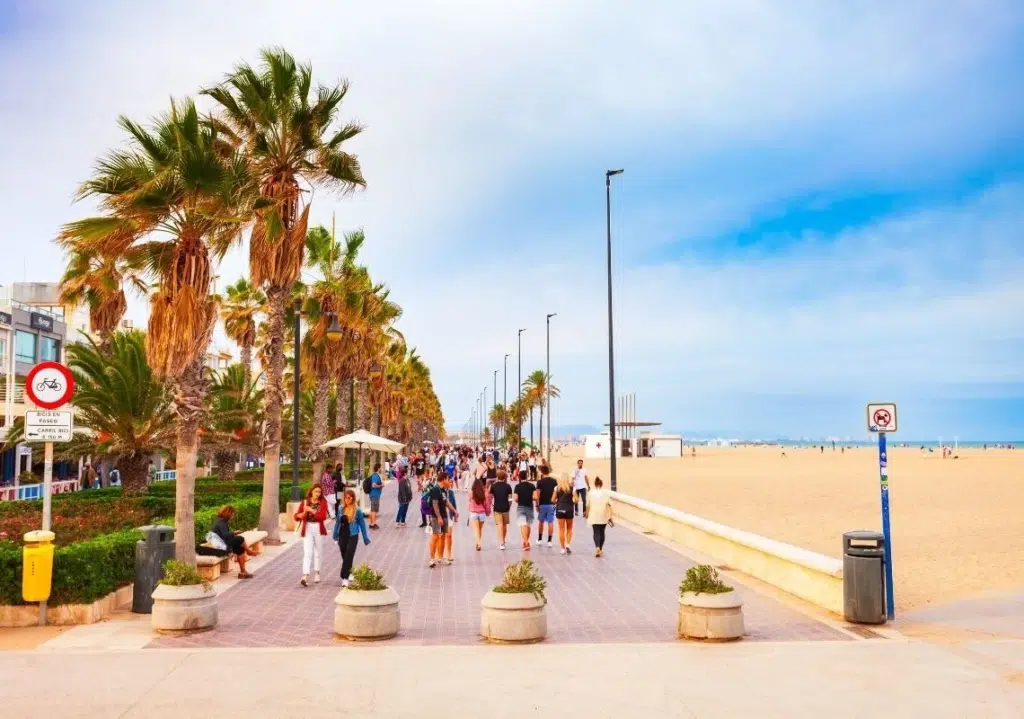
When people want to go to a beach in Valencia, Malvarossa Beach is one of the most popular options. It’s a nice beach, big enough, and touristy if you like it. However, it can get crowded, and there are better (in my opinion) beaches and areas. If you go a little north, there is the Cabanyal neighborhood. They are right next to each other. It’s the most visually distinct neighborhood in the entire city, has its own beach, local bars, and it’s not that touristy.
- Mosaic Fishermen’s Houses and Local Bars: Cabanyal was originally a fishing village, and the houses here are covered in colorful ceramic tiles, mosaics, and hand-painted facades. This neighborhood (it became a neighborhood as Valencia got bigger) almost got demolished for a highway extension in the 2000s, and locals fought to save it, so it may not have been here now. Small neighborhood and small community. Grab tapas at Casa Montaña, a tavern that’s been serving locals since 1836. Tapas bars are also great.
- Patacona Beach Instead of Malvarrosa: If Malvarrosa feels too crowded and touristy for your taste, walk about 5-15 minutes north to Patacona (depends on which part of Malvarrosa you’re in). It’s the same golden sand and same warm Mediterranean water, just with fewer sunbed vendors and more actual locals swimming, playing volleyball, and eating lunch at low-key beach bars.
Secret Gardens and Green Spaces Beyond Turia
Outside of the beaches, Valencia is also popular for its gardens, and the Turia Gardens get all the attention and are by far the most famous ones. And fair enough, they’re beautiful. But Valencia has a handful of smaller, quieter green spaces that barely show up in guidebooks. I recommend going to these gardens to spend time and see, in addition to the Turia. Way friendlier for walking around.
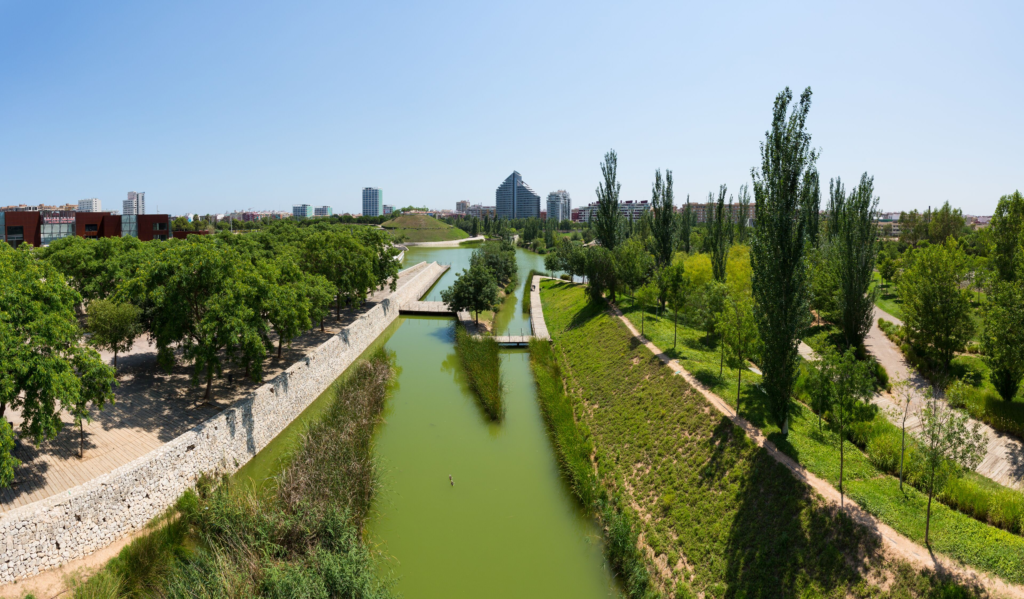
- Jardín de Monforte’s Neoclassical Hideaway: This small neoclassical garden is filled with marble statues, ornamental fountains, and manicured hedges, and most days you’ll have long stretches of it entirely to yourself. It’s free to enter and makes for a genuinely peaceful break. It’s also great to make it a mid-day stop to step away from the heat and the sun, where you don’t have to pay for a ticket or a meal.
- The Garden of the Hesperides: Just behind the Botanical Garden, this smaller garden, named after the mythological nymphs, sees the faces of guidebooks even rarer than Jardin de Monforte. It’s free, shaded, and quiet enough that you can hear birds instead of tour groups.

Outdoor Markets
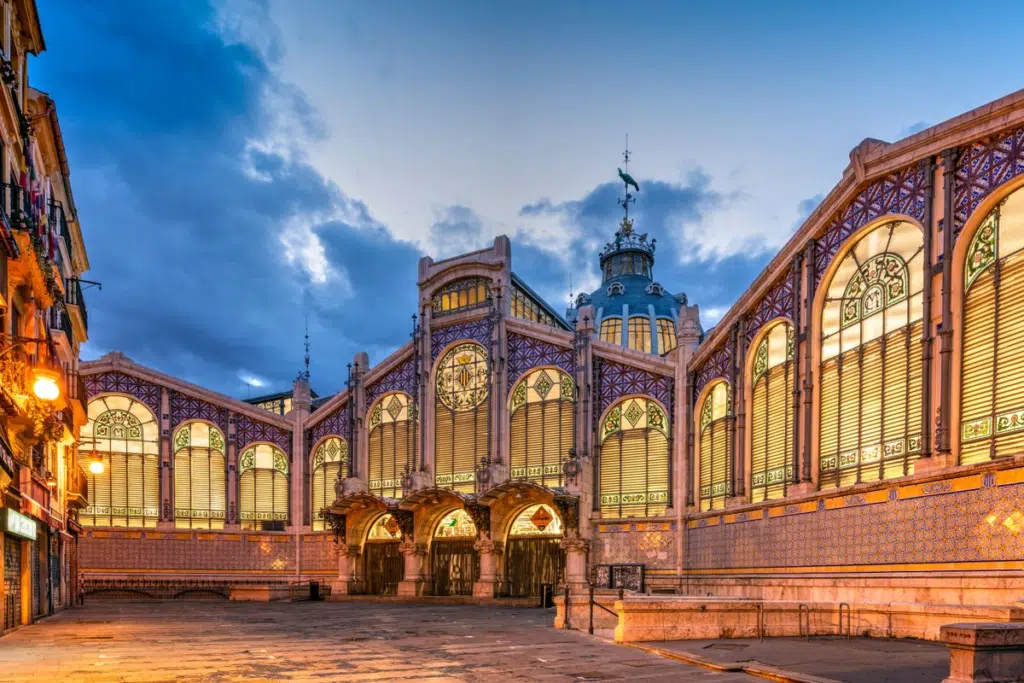
Whenever I go to Spain or Portugal, I visit the city’s market, no matter where I am. Even in the most touristic cities, you can find amazing markets. Some have several, and some have only one, depending on the city’s size. But whenever I can, I skip the touristy markets and try to find smaller, more local, further away markets. Valencia has these small ones. Central Market is the biggest and most touristy. Give it a tour, it’s a nice place, but too expensive to actually buy something. You can go to the Mercat de Rojas Clemente in Ruzafa on a weekday morning instead, where you’ll find better prices and actual locals doing their weekly shopping. There are also rotating weekend flea markets around the city selling secondhand clothes and antiques, great if you’re traveling on a budget and want a souvenir that isn’t mass-produced.
Best Day Trips from Valencia
Day trips from most big European cities are given. And one of the best things to do in Valencia Spain is to do a quick day trip from Valencia. You probably already know that day trips from Malaga, Barcelona, Granada, Madrid, and so on are incredibly rich, and you can spend days doing different day trips. Valencia is no exception. You can go to Alicante, Xativa, Requena, and more. The two most interesting ones (although not ‘secret’) are Albufera Natural Park and Raquena.
Albufera Natural Park: Boat Rides and Rice Paddies in El Palmar
Albufera is a freshwater lagoon surrounded by rice paddies just south of the city, and El Palmar is the small village inside the park considered the true birthplace of paella. Budget-friendly boat tours across the lagoon run around 5 to 8 euros per person and typically time the ride to catch sunset over the water and rice fields, which is one of the most underrated views near Valencia. Afterward, eat paella in one of the family-run restaurants in El Palmar rather than in the city center of Valencia, it’s more authentic and often cheaper.
I suggest visiting the park during the day, doing your activities (some great hiking places), and then getting back to the city, El Palmar, for the sunset. It’s really nice for that, and grab a paella once you are done in the Park. You can also spend some time in the city, walk around, it’s quite pretty. Getting here is pretty straightforward. You can easily take the EMT (Valencia’s public transportation buses) Line 25, and it will put you in El Palmar, where you can start by seeing the city. There is also Line 24 that will take you to the Gola de Puchol pier if you want to take a boat ride. Tickets are 1.50 Euros.

Requena
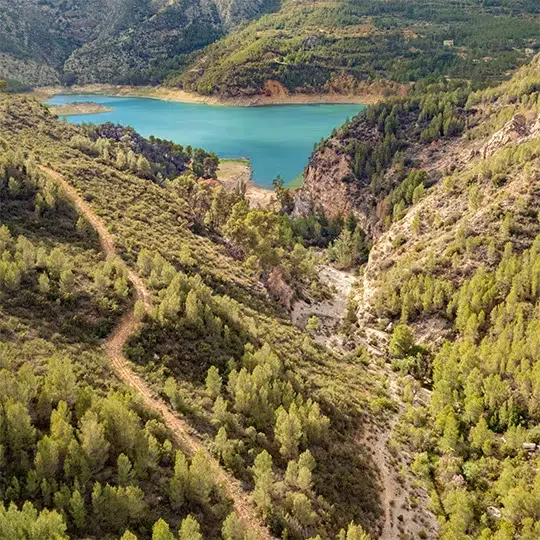
Requena is a famous town known for its wines, caves, and sausages. It sits at a higher altitude than Valencia (about 700 meters above sea level), and the weather is noticeably more bearable in the summer. Back in 1966, this town was declared an Historic-Artistic Site because of its beauty and history. One interesting thing about Requena is that there are so many underground caves under the city that it’s like a massive labyrinth. People built those to store food and even hide during times of war. The second thing about Requena is its wine. It’s the house of the Bobal grape that can create really great, deep, dark reds and roses. You can get great wine tastings and explore the area, wineries, and taste the sausages with the wine tasting.
Getting here is not easy, you have to take a train and a bus. You can take the fast train, which takes 15 minutes (and about 15 to 25 Euros) but puts you in the middle of nowhere. You are going to need to book a taxi beforehand if you use the fast train. The local train drops you downtown, but it takes 1 hour and 45 minutes. Frequency is not too much, but it’s cheap, about 4-5 Euros. Buses take 1 hour 15 minutes, drop you in the town, but again, the frequency can be tricky.
Free and Cheap Things to Do in Valencia
In these big cities, things can get expensive really quickly if you are not careful. Or you may be traveling on a tight budget to begin with, you may be backpacking, or any other reason, and you may want to find free or low-budget things to do in Valencia, Spain. Luckily, Valencia is a green city with a bunch of stuff you can just do by walking around. Most of the things I mentioned here are also free, so they will be a combination of those and some other things here. I have a few of my favorites here:
- Watch the Tribunal de las Aguas at the Cathedral’s Apostles’ Door, free, every Thursday at noon.
- Visit Jardín de Monforte and the Garden of the Hesperides, both free year-round.
- Visit L’Almoina Roman ruins for free on Sundays and public holidays.
- Explore Campanar and Benimaclet on foot for a completely free afternoon
- Take the public bus to Albufera National Park for a day trip from Valencia for only 1.50 Euros.
- Look for street art in El Carmen, which changes regularly.
- Shop at weekend flea markets around Ruzafa for cheap souvenirs and secondhand finds
Also, remember to visit in shoulder seasons if you want cheaper accommodation options and overall lower prices in town and for things to do in Valencia, Spain. Similar to how shoulder season works in Malaga, late spring (April to May) and early fall (late September to October) have warm, pleasant weather without the summer crowds or prices in Valencia, too. Accommodation is noticeably cheaper outside of July and August, and during Las Fallas in March.
FAQ
Is Valencia worth visiting?
I’d say yes, but it depends on your goals. Beaches, parks, hikes, and food? Absolutely. Don’t like too hot places? Want to surf? No. Neighborhoods like Cabanyal, Benimaclet, and Campanar, along with sights like the Water Court and L’Almoina ruins, are some of the best things.
How many days do you need to see Valencia?
Three to four days gives you enough time to explore the neighborhoods in this guide, take the Albufera day trip, and still leave room for the well-known highlights like the City of Arts and Sciences.
Is Valencia a budget-friendly city to visit?
Depends on how you plan and where you go. I’d say mostly yes, especially compared to Barcelona or Madrid. Many of the best experiences here, like the Water Court, free museum days, and neighborhood wandering, cost little to nothing, and food is generally cheaper outside the main tourist zones.
What’s the best neighborhood to stay in Valencia for a mix of budget and atmosphere?
Ruzafa and Benimaclet both offer a good balance of affordability, walkability, and local character, making them better choices than the pricier, tourist-heavy streets right around the Cathedral.