When anyone talks about Spain, it’s either Andalusia, Barcelona, Madrid, or somewhere mainstream. I don’t see or hear many people talking about Northern Spain, especially Galicia. Galicia feels like a different country than what we are used to. Atlantic cliffs, ocean vibes, tiny fishing towns, hilly areas, and small, compact cities. Cities in Galicia Spain are also different in each level. You have inland towns with more of a calmer vibe and coastal towns with surf town vibes like Ericeira in Portugal. It’s a little bit of everything and that’s why I love this area. It’s also empty! Well, compared to rest of Spain, at least.
Check this article out, too: Surfing in Portugal: Ultimate Guide to Best Spots
Cities in Galicia Spain, and the overall Galicia region are much greener, cooler (weather-wise, too), and less touristy. After many articles talking about Andalusia, Seville, Malaga, and so on, I thought I should spend the time to talk about Galicia and the cities in Galicia Spain. I really like the surf scene in Galicia, it’s a whole different vibe compared to Portugal, for example. Where should you see and what should you do?
Why Visit Galicia: About the Galicia Region
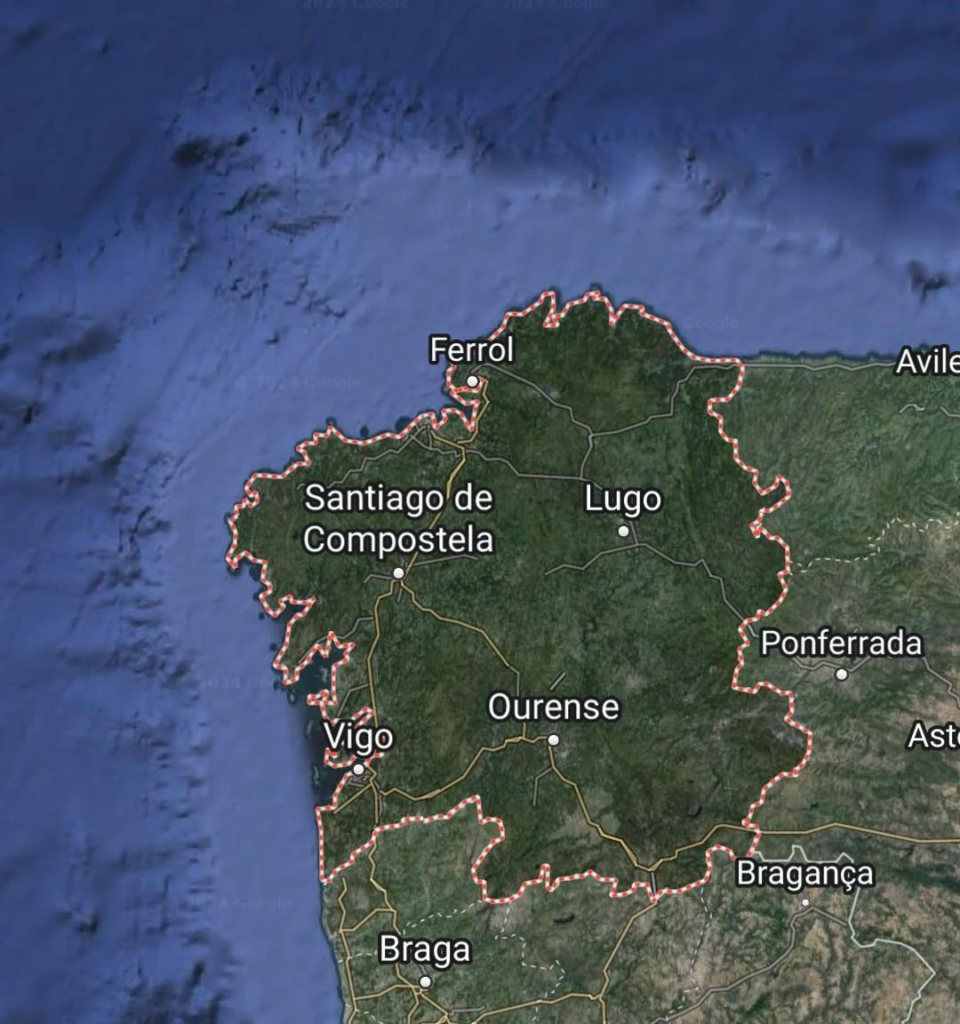
Galicia Spain is a unique region, in my opinion. It’s tucked in the Northern corner of Spain, with a coastline to the Atlantic Ocean. That’s the only part of Spain with a coastline on the Atlantic. I guess also because it’s far away from all the popular areas, it’s not as touristy. It’s a different side of Spain, and the cities in Galicia, Spain, show that. A Coruña, Santiago, and all others have a unique vibe. It’s full of rolling hills, eucalyptus, pine forests, less sunny skies, and a lot greener.
The region itself is also smaller than Andalusia. Galicia has a population of 2.71 million, about 5.5% of Spain’s total population (as of 2025). To compare, Andalusia’s 2021 population was 8.67 million. You can imagine that life is slower, smaller, and more local. Life doesn’t exist for tourists, and there are amazing little surf towns. A Coruña, for example, is probably the biggest surf town and it had about 250,000 population in 2025.
Food, wine, and the sea
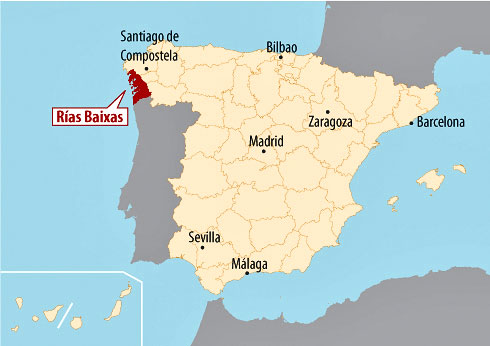
Galicia is one of Spain’s great food regions. In addition to all the activities to do and cities to see, food is another reason. The entire coastline functions as one big seafood market: octopus, mussels, clams, razor clams, turbot, scallops, and endless variations of empanadas (savoury pies). You can find these across Spain but these are Atlantic seafood, they taste a bit different. For some, it’s better, for some it’s worse. But I think it’s worth a try. Then there’s the wine. The Rías Baixas region is home to Albariño, a crisp, aromatic white that is tailor-made for seafood. Around Pontevedra and Vigo, you can combine city time with winery visits and tasting menus without going far at all. Like in Porto and Duomo Valley, you can do wine tasting in wineries. Definitely recommend it.
Getting around Galicia
Galicia Spain is not a big region like I said. Despite being small, there are still relatively big cities, and it’s packed with those. Since the region is small, getting around it is not so hard. There are trains that run in the main corridor. They connect A Coruna, Santiago, Vilagarcia, Pontevedra, Vigo, and Ourense. Services are regular, fast, and quite cheap. If you are going to travel around, use the train. For other cities in Galicia, Spain, you can use buses, even to the small coastal towns and villages. They are reliable, and in some cities they may not be frequent, but you will find buses every day. You can also rent a car, but it’s usually not necessary if you are looking for a chill holiday and just do city-hopping. If you want to hike, surf, go to wild beaches, lighthouses, and tiny wine villages, then I recommend a car. It’s a must for those.
The big seven cities in Galicia Spain are:
- Santiago de Compostela
- A Coruña
- Vigo
- Lugo
- Ourense
- Pontevedra
- Ferrol
Best time to visit cities in Galicia Spain?
The climate in cities in Galicia is mild, as it’s a coastal region. You can think of it like milder Andalucia. Throughout the year, it’s sunny, slightly colder, and gets warm during the summer. Because it’s an ocean climate, you may get chill evenings with a lot of wind, but not so bad. If you prefer beach days and enjoy every day, aim for the summer months. It could be crowded, but it won’t be extremely hot like the cities in Andalucia, so it’s worth it. Spring and autumn are great for activities like hiking and more outdoor adventures. Surf’s good year-round.
Santiago de Compostela: Your Base
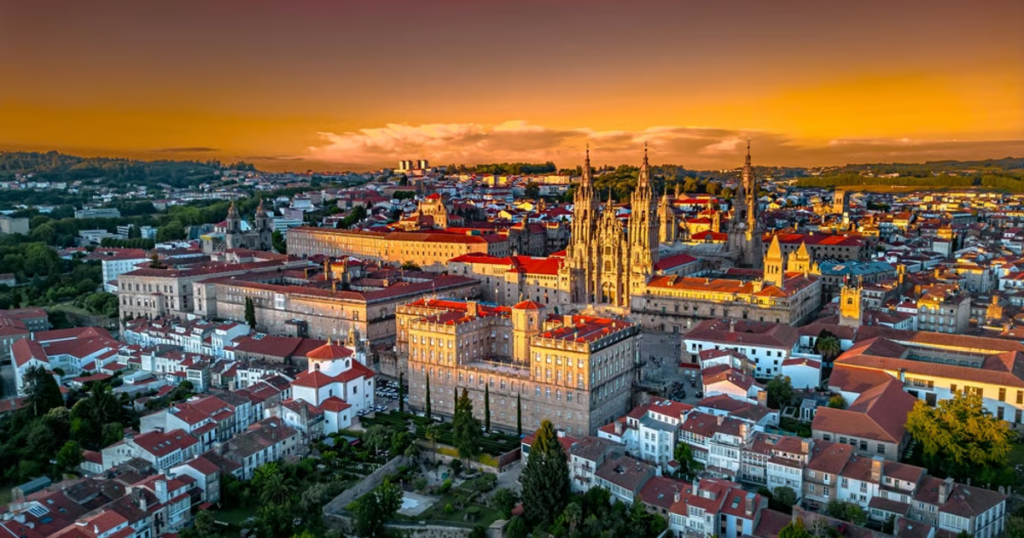
Santiago de Compostela is the official capital of Galicia and the emotional capital for thousands of pilgrims walking the Camino each year. The whole historic centre is UNESCO-listed. You’ll mostly find religious places like chapels and so on, but there is more to it. Beyond the religious side, Santiago is also a student city with a big university, so it never feels like an open-air museum. There’s a constant mix of pilgrims, locals, and students. The city is always alive. Something is always going on, but never too touristy. Like a chill local vibe.
One thing is that Santiago makes an excellent hub. If you are looking for a place to settle and do day trips every day, make it Santiago. It has everything, and it connects everywhere with fast train or bus rides. Sleep here and do easy day trips to other cities in Galicia Spain. If you have a car, even better, but then I’d suggest a smaller town to take as a hub. Cheaper and calmer.
What to see and do in Santiago
Start in Praza do Obradoiro, the main square in front of the cathedral. That cathedral is where the exhausted pilgrims arrive to rest (used to be, at least). Today, it’s a hotel that hosts exhausted travelers instead. The cathedral itself is huge, and the courtyards are open to visitors who don’t stay in the hotel. Good to walk around! As with many other Spanish towns, definitely visit the old town. It’s small but compact. You can happily spend hours ducking under arcades, slipping into side streets, and stumbling upon small churches and cloisters. The university buildings, convents, and stone façades are all good views. I like Parque de Alameda very much. You get an amazing view of the city. This is the main park and “lung” of Santiago. Great place for a chill afternoon, morning, or a whole day walking around. It went through several restorations and extensions to make the park what it is today.
A Coruña: Atlantic Coast
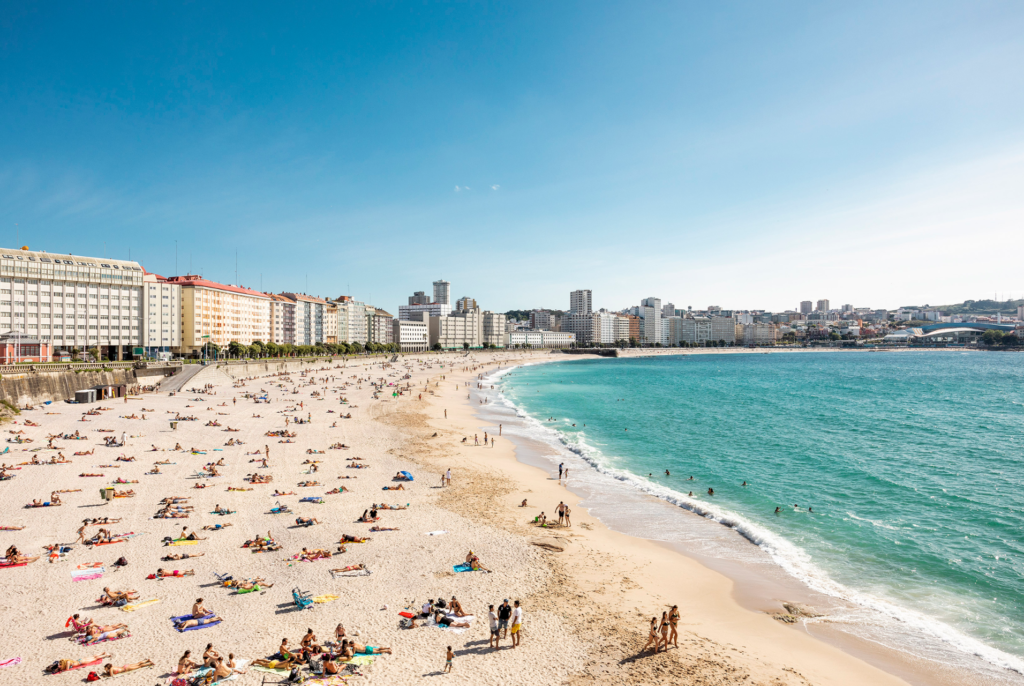
A Coruña is my favorite. I even have an article just talking about this city and what to do. The city is wrapped around the sea. I resemble that to Peniche in Portugal. It sits on a peninsula with beaches on one side and a busy harbour on the other. It’s bigger and more urban than Santiago, but still compact enough to walk almost everywhere. This is where you get that Atlantic vibe. It’s the Spanish version of Portugal’s coastal and surfing cities like Nazare, Peniche, Ericeira, and so on. You’ll find locals on the beach and seafront no matter what the weather is like, especially during the weekends. It’s got amazing urban energy, and yes, you can surf here. You have the surf vibe. A Coruña also makes a great hub if you want the beach energy. Santiago and Coruña are about a 30-minute train ride away from each other.
What to do in A Coruña
The most famous historical sight to see is the Tower of Hercules, the world’s oldest working Roman lighthouse and a UNESCO World Heritage Site. You can climb the tower, and it has a view of the city, you can see all of it, it’s quite cool. Another historical sight to see is the Igrexa de Santiago, the oldest church in the city. You can still go in today; it was built in the 12th century and has undergone a few remodelings.
After the historical sights (there are many others, these are the two main ones), head to the old town. Xardin de San Carlos is a calm park with walls that overlook the Atlantic and the city. The San Anton Castle is also worth a walk-around when you are around here. If you prefer hikes around the city, go on the Paseo Maritimo. It wraps almost the entire peninsula with a red-paved seafront path that links all the must-sees, including the lighthouse, viewpoints, and the main city beaches (Riazor and Orzan). Great place to go for a hike and see the city at the same time.
Surf life in A Coruña
This city is not just the old town, parks, hiking routes, and historical sights. It’s a surf town with amazing food and lively nightlife. Spain doesn’t have a lot of surf towns and cities. Compared to Portugal surf towns, it’s very small, but those little towns are worth a visit. The main beaches in A Coruña are Riazor and Orzan, and you can surf there, but it could get crowded. If you move a little away from downtown, there are a few good ones like Traba beach, Pantin, Louro, and so on.
Vigo – Big City Vibes and Island Gateways
Vigo is Galicia’s largest city, but it’s not a calm beach city or a tourist hotspot. It’s a port city with shipyards, big industry, and surprisingly good food. This city is not as pretty as Santiago or A Coruña because it’s a port city. So you’ll have less to see and do, but it makes for a nice day trip. The focus here is usually on the old quarter (downtown), restaurants, and history. Vigo is good for just spending your time walking around and reading up on the history. Along the port (not the one with shipyards, but one that’s lively), there are streets filled with seafood restaurants. Usually, they serve whatever was caught that day, so the menu changes a bit. They have amazing wines, too, of course. Vigo is close to the Rias Baixas area, and you can reach Bajona or Combarro very easily. They are coastal towns worth the effort. You either need to take the bus or have a car, though. They don’t have trains.
What to see and do in Vigo
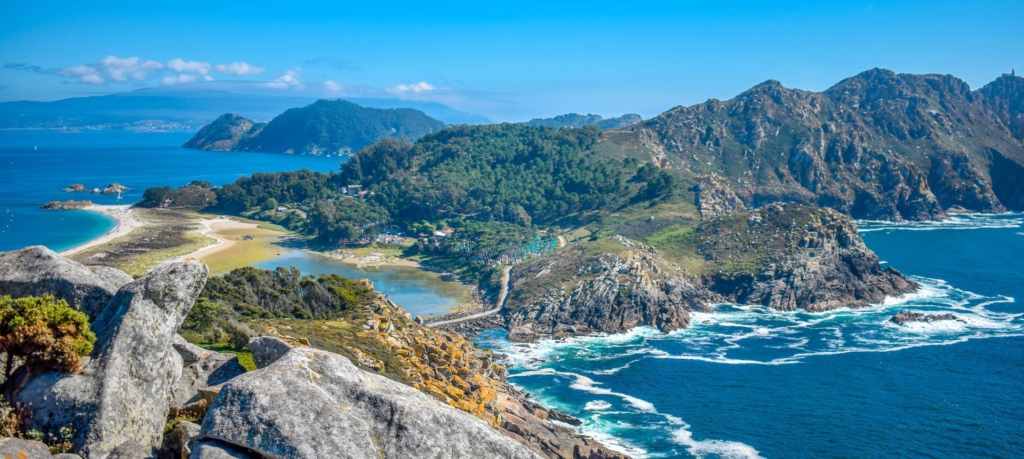
The Casco Vello (old town) has been getting more love in recent years, with restored façades, wine bars, and small plazas. Like many other Spanish towns, the old town is charming, but in Vigo, it has started to gain more traction because of these restorations. One of the biggest differences you can get in Vigo compared to other cities in Galicia, Spain is the Cies Islands. They are part of the Atlantic Islands National Park. You can catch a ferry from Vigo, and you can get there in under an hour. There are white-sand beaches, hiking trails across pine-covered cliffs, and many more beautiful areas. In summer, you have to book in advance for these hiking trails and even ferries.
Lugo: Roman Walls and Quiet Charm
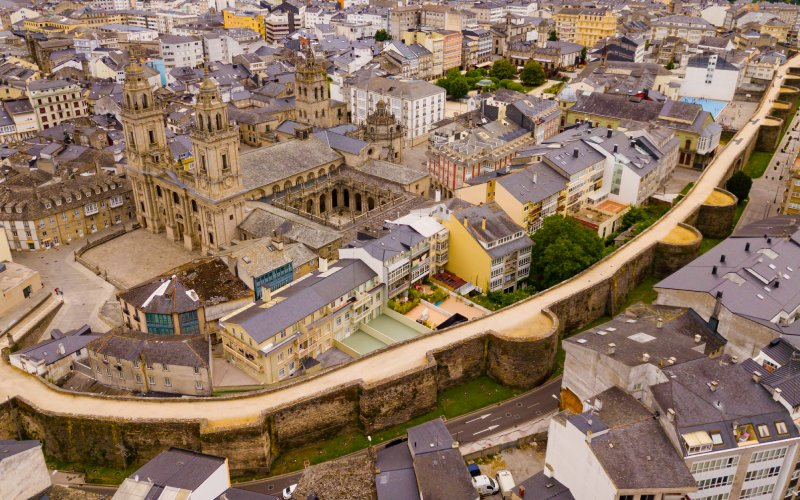
Lugo is an inland city, so it’s not as popular as others. I don’t like inland cities, to be honest, but Lugo is an interesting place. It is quiet, small, and has a completely intact Roman wall that circles the entire historic center. It deserves a day trip just for that. Probably it’s not worth it to stay more than that (if you don’t like inland cities like me). But if you like live, walkable small cities that give you the calm summer vibes, one night here won’t hurt.
The Roman walls are the main attraction and a UNESCO World Heritage Site. You can walk the full 2‑km+ circuit along the top, with views over the old town on one side and the modern city and countryside on the other. Inside the walls, Lugo’s old town is a tangle of streets leading to the cathedral and main squares. It feels compact and lived‑in rather than curated, so it’s not made for tourists. There are lots of small shops, cafés, and bars where everyone seems to know each other.
An additional thing to do in Lugo is eat. Lugo is a very good city to eat in. There’s a strong tapas tradition, with many places offering a free small plate with your drink, and portions tend to be generous and hearty. Food is mostly made from plenty of meat, stews, and classic Galician dishes, plus good value compared to more touristy areas, it’s usually cheaper.
Ourense – Hot Springs and Bridges
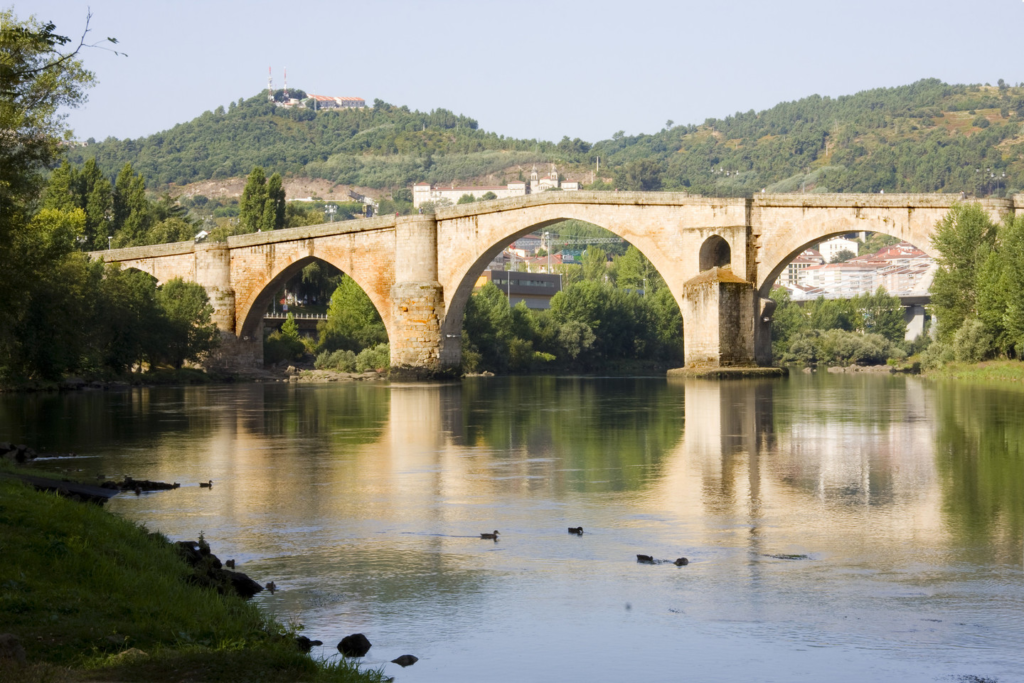
Another inland city is Ourense, it’s south-east of Santiago, and it’s known for one thing mostly: hot springs. Ourense makes up for being inland with its popular and amazing hot springs. The city is basically on the Mino River and has several thermal waters. Some are even outdoors. Another good thing about Ourense is that it’s a railway hub. If you use the high-speed train from Madrid or come by rail from another part of the country, you will likely pass through Ourense on the way to Santiago or change trains in Ourense.
Obviously, the big draw is the termas (hot springs) for many people. Many come here just for that, spending a spa weekend. There are riverside thermal pools like Outariz and A Chavasqueira, some free and some paid, where you can slip into steaming water while watching the river flow by. It’s an easy, very Galician way to unwind. In town, you’ve got the Roman bridge and several more modern bridges (like Millennium Bridge) crossing the river, plus a compact old centre. San Lazaro Park is also a great place to just walk around and enjoy the weather and outdoors.
Pontevedra: Rías Baixas Hub
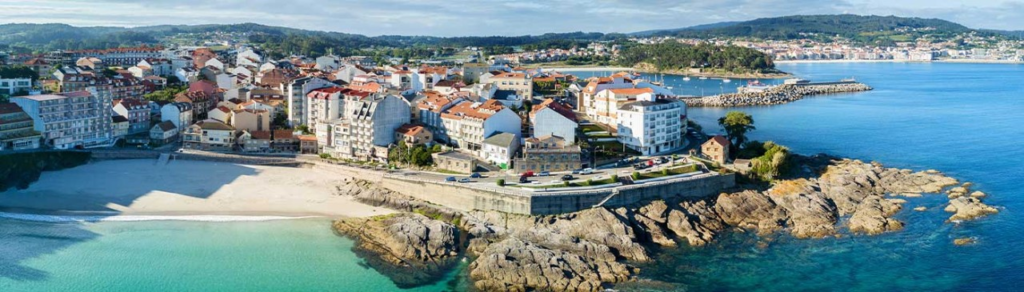
So, Pontevedra is not popular. Not a lot of people come here and don’t even know the city. Like other small cities in Galicia, Spain, it’s similar in many ways, with a historic center, walkable, small, compact, and there are really nice bars and plazas. You get that “I want to live here” feeling. An additional good thing about Pontevedra is that it’s in a perfect location to easily reach the Rías Baixas coast and the Albariño wine country. If you are looking for a cheap base to go to these areas, Pontevedra is amazing.
It may feel like I am starting with the same thing, but I assure you, it’s worth it. You have to walk. That will be your main activity in Pontevedra, and you’ll get to see squares like Praza da Lena, Praza da Ferreria, and the area around the Basilica is like a living room for locals. Pontevedra Museum and the Ruins of San Domingos are also good activities if you are into history. Another good thing about Pontevedra is that it’s well connected to nearby small towns and regions. Combarro, Cambados, Aruousa, and O Grouve are some of the classic spots. Cambados is the centre of Albariño wine production, and it’s great for wine tasting. O Grove is a beach spot.
A really good activity to do is wine tour trips to Rias Baixas. Usually, food is also excellent, so most tours combine both in one – wineries provide wine tasting with good food. If you have the time and are there for more than one day, do the wine tours.
Ferrol: Naval History and Northern Coast
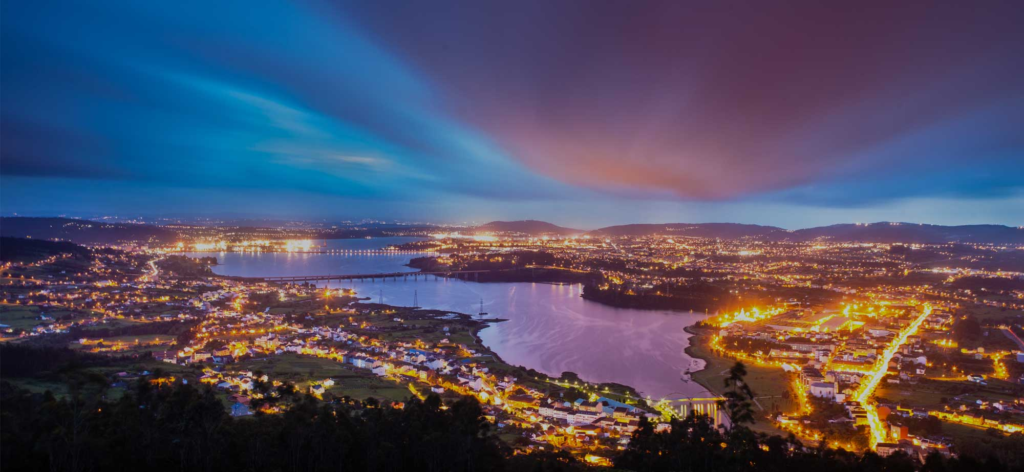
Ferrol is a naval city on the north coast. It’s not polished or particularly touristy, but that’s part of its interest. If you’re curious about Spain’s military and shipbuilding history or you want to tap into the wild northern coastline, Ferrol is worth considering. It’s also the starting point for the Camino Inglés (English Way), a shorter Camino route that runs from Ferrol to Santiago. The Arsenal and naval history define much of the city’s identity, and the Barrio de la Magdalena is an 18th-century neighborhood with a clear grid, elegant buildings, and iron balconies. From Ferrol, it’s easy to reach some of Galicia’s coasts: Ortegal Cape, huge cliffs, and lesser-known surf beaches that feel very far from mass tourism.
Classic Galicia Experiences You Shouldn’t Miss
One of the good things about the Galicia region is that the cities in Galicia Spain do not just offer city breaks or city visits. It’s a great place to some have adventures, try new things, be out there in the nature. Some of those adventures are not to miss. These things vary from food and wine tasting to hiking and surfing and each are great, everyone can do it without any training. Most require some physical endurance, though. So choose wisely. Here are some of the most classical ones.
Taste Albariño and Galician wines
In the south, around Pontevedra and Vigo, you’re in Albariño country. There are Wineries around Cambados and the Rías Baixas that offer tastings and tours where you can learn how these crisp, slightly saline whites are made. It’s a classic experience like you would have in Duomo in Porto. There are also interesting reds and whites from Ribeira Sacra (dramatic river‑side vineyards) and Ribeiro, which show up on wine lists across the region.
Walk a piece of the Camino
Camino is a world-renowned hiking route that runs across Spain, but you can walk sections of it. You don’t have to do the entire thing, so you can take a sample of it. In the Galicia region, you can have one of the best short sections. These are around Santiago, A Coruña, or Ferrol. You can select the path and how long you want to go, and just hike a piece of the Camino path. This is not really special to the Galicia region, since the path runs throughout the entire country, so you can do it in most parts. The good thing is that the parts here are almost at the end of the trail, and they are beautiful.
Coastal walks, surf, and wild beaches
The Galicia region is famous for its surf. It’s the only area in Spain where you can properly surf (across the whole Northern coastal region), so it’s pretty popular for locals and also for Europeans coming from other parts of Europe. Portugal is already very touristy, and Galicia is left out, so it’s a much better experience and cheaper. For surfing, you will find friendly beach breaks for beginners to more serious waves for the experienced ones. There are a lot of beaches, and each of them is beautiful.
The Galicia region also has a lot of wild beaches. From Vigo, boat trips to the Cíes Islands get you to some of the best ones with fine sand, dunes, and protected waters. From A Coruña or Ferrol, the Rías Altas and Costa da Morte have wild headlands, lighthouses, and big Atlantic swells. The normal and wild beaches usually have walking paths where you can walk end-to-end. Some are even connected with walking paths.
Conclusion
The Galicia region in Spain is a rich but undiscovered area. When people think of Spain, they think of Barcelona, Valencia, Malaga, Andalucia, Madrid, or anything in between – the popular stuff. But that’s not all there is to Spain. The northern coast is amazing, and Galicia is the cultural capital of Northern Spain. You have more than 10 small cities and a handful of big cities, and none of them are touristy. You can surf in the coastal part and go inland to do wine tasting, hike, and enjoy the amazing weather. Cities in Galicia, Spain are very diverse in that sense and are worth the time. Aim for at least 3 to 5 days if you want to see most of it. You can even spend a week or more if you want to see it all and experience all the activities and experiences.
FAQ
Which city is the capital of Galicia, and what languages are spoken?
Santiago de Compostela is the region’s administrative and cultural capital. Both Spanish and Galician are official languages. You’ll hear Galician (Galego) widely, especially in smaller towns. Spanish works everywhere.
What are the must-do activities in Vigo?
Take ferries to the Cíes Islands for white-sand beaches and hiking, sample oysters and fresh seafood, and walk the lively port neighborhoods. Vigo’s maritime energy and markets are a big part of its charm.
Why visit A Coruña and what should I see there?
Visit for waterfront promenades, museums, and the Tower of Hercules — a working Roman lighthouse. Don’t miss the glass-fronted balconies on historic streets and the city’s busy waterfront life.