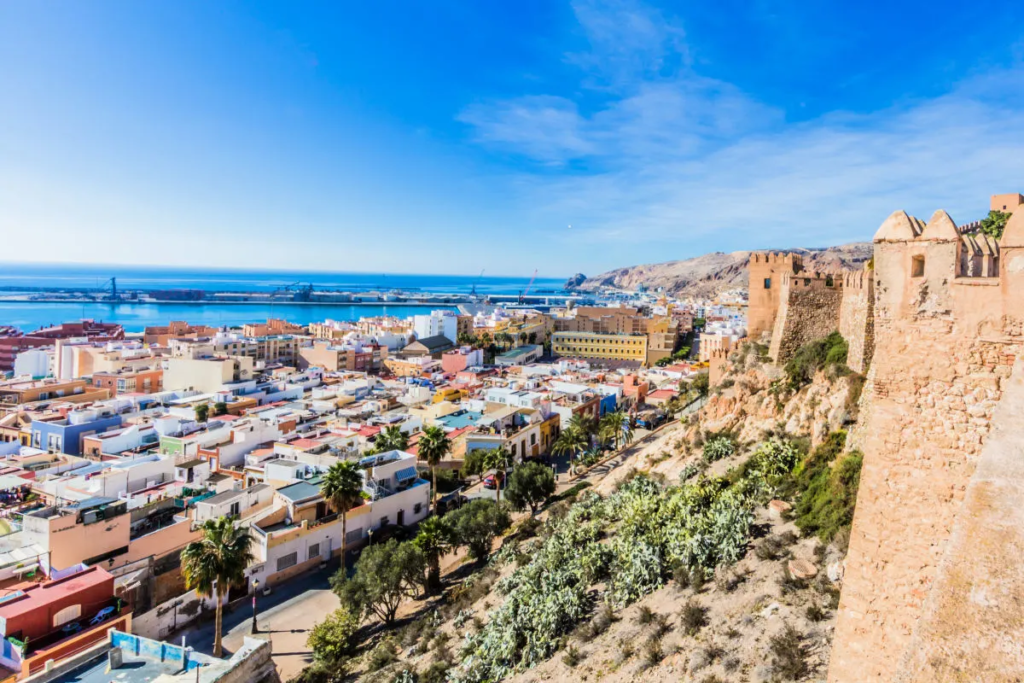
Almeria in Spain is one of those destinations that’s not too big to attract all the tourist crowds, but also not too small to have nothing to do. It’s on Spain’s Southeastern coast and usually gets lost between Granada and Malaga. Like many Andalusian cities, this city also has historical fortresses, amazing seafood, and beaches. The good thing is you don’t have to fight the crowds. Without the crowds, you need to diligently choose what to do in Almeria Spain to use your time wisely.
Check this article out, too: A Coruna Spain: The Ultimate Guide
That part is not so easy. The city has great beaches, historical sights that combine several cultures in one place, many film locations from your favorite Hollywood movies, and so on. You need a good, solid guide on what to do in Almeria Spain. We don’t talk about it much, but it’s a must-visit in Andalucia.
Why Visit Almeria Spain and Practical Tips
Almeria is not good for everyone or the usual traveler. It doesn’t have the famous Instagram places like in Seville, Granada, or Malaga. You can’t find that beach resort feeling. It’s a cute, small town (or village) that is good for a day or two to relax, wind down, and do a little sightseeing. There are definitely no tourist traps (not as much, at least), mostly locals around the coffee shops and restaurants, and you may even struggle if you don’t speak Spanish.
On top of all these experiences, Almeria Spain also has a solid historical background. Almeria was the heart of the Moorish Kingdom of Al-Mariyya back in the day. You can find architectural stuff from that time, like fortresses. I have to be honest, compared to the big Andalusian cities like Malaga, Granada, and Seville, the historical sights are not as much. Set your expectations on this and you can put even all of these on your what to do in Almeria Spain list.
Like other Andalusian cities, the weather here is similar. Over 300 days of sunshine, mild winters, very hot summers, and absolutely amazing shoulder seasons. Additionally, there were a few Wild West movies they shot here. If you are a fan of those, you can find the locations easily.
How to Get to Almeria
Almeria is close to many big Andalusian cities. Usually, it makes sense to visit if you are doing an Andalusian road trip or are in one of the closest cities. Granada is the closest Andalusian city. It’s 160 km away from Granada. The bus takes about 2 hours, and it’s the same for the train (bus costs about 15-20 Euros). Buses are more frequent, but trains can be more comfortable. If you are around Alhambra, it makes sense to hop onto Almeria.
Malaga is about 200 km away, and there are a few direct buses every day (ticket prices are similar to those in Granada), taking about 3 hours. If you go from Malaga, it’s better if you either do a day trip from Malaga with the car or stay overnight if you go by bus. Otherwise, it’s too stretched out. Almeria also has an airport, and you can catch a direct flight from Madrid or Barcelona. Each takes about 1-1.5 hours.
Getting Around Almeria City
The city is walkable, just walk or rent a bike. Most attractions are within a 20-minute walk of the city center; for longer trips to Cabo de Gata or the desert, taxis, local buses, or car rental are your options. Buses are pretty good.
What to Pack for Almeria?
Almeria, like other Spanish destinations, can be tricky to pack for, especially in the shoulder seasons and winter. You need high SPF sunscreen no matter the season, a light jacket for the summer (for the evenings and for air-conditioned places), swimwear, a beach bag, light and breathable clothes, and a wide-brimmed hat. These are mostly for summer, but you can think similarly for winter, too. Just bring layers and light, long-sleeved t-shirts for winter.
Best Times to Visit Almeria Spain
Usually, the Andalusian side, including Almeria, is best during spring and fall (check out my best time to visit Seville article, it will give you an idea of the seasons). The weather is always good here, sunny, and not too cold. April and May are the best with the temperatures below 30 degrees Celsius and little to no rain. But the best time to visit Almeria really depends on what to do in Almeria Spain for you. What activities are you going to do and where are you going? If you want to go to the beach and it’s scorching hot, nothing much, go during the summer. It may be a bit crowded, but the weather will be perfect for you. Winter is a bit special. You’ll still see Christmas celebrations like the Christmas markets, and the weather will be mild, not too warm, not too cold. There won’t be any tourists, though.
Must-Sees in Almeria Spain
I want to divide this what to do in Almeria Spain guide in different sections. Because it won’t do justice if I don’t talk about some things separately and more in depth. First up are the must-sees, mostly historical sights in Almeria , Spain. If you are creating your what to do in Almeria Spain list, take these at the top. They are close to each other; you can walk easily.
The Alcazaba of Almeria
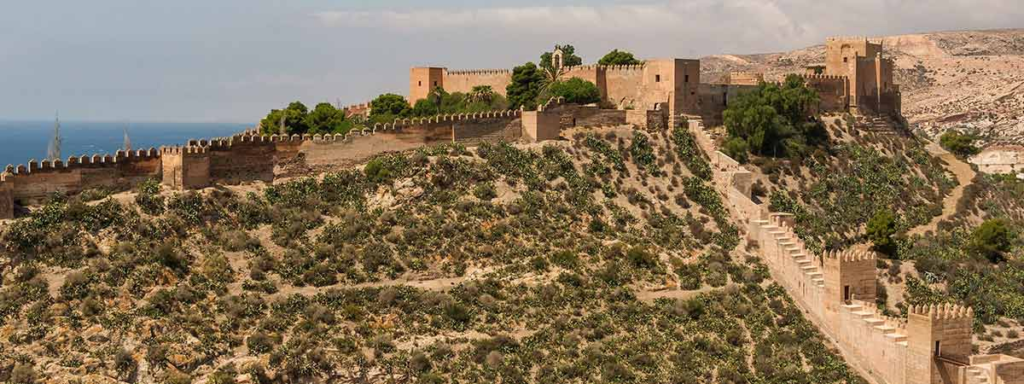
The Alcazaba of Almeria is the star attraction in Almeria. It is the largest Muslim fortress in Spain after the Alhambra, built in the 10th century during the reign of Caliph Al-Hakam II. You can climb up to it, and you should. Back then, it was designed to protect the wealthy port city and house 1,000 soldiers. From the entrance, you’ll walk through three distinct lines of defense: the outer walls, the inner fortress, and the citadel.
Inside, you can see the entire Almeria below, the Mediterranean, and the Barrio de la Chanca (quarter of traditional cave dwellings carved into the hillside). On a clear day, you can even see the Barrio’s white-painted cave houses where locals still live. There are also pretty gardens where you can walk through and see the places where people used to use. Like the cisterns that used to keep water during sieges. Really good historical place. Going there is a bit tricky; it’s about a 15-minute walk uphill from the city center, or you can take a small tourist train. Entry is around €3.50.
Almeria Old Town & La Rambla
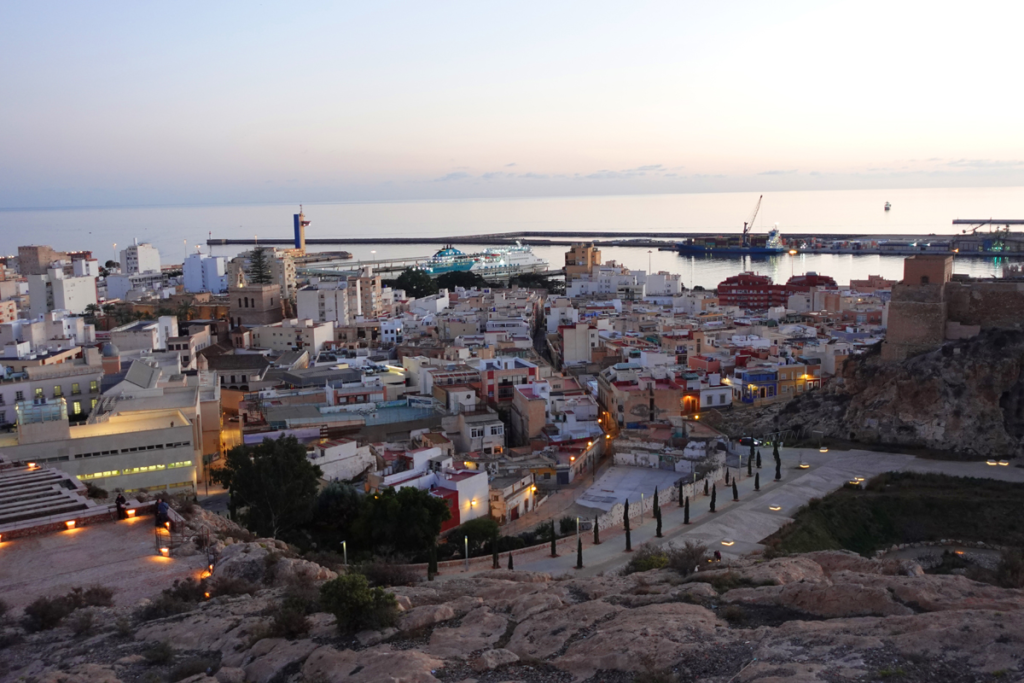
Beyond the fortress, Almeria’s city center is another historical must-see. La Rambla is a beautiful, tree-lined promenade running from the port up toward the city center. It’s full of cafes, fountains, public art, and the iconic Almeria sign, where thousands of visitors take photos. The famous Ferris wheel is also here. Nearby, you will also see the main square, Plaza Vieja, it’s worth a go-around and sitting down at one of the cafes. You can go inside the Cathedral of Almeria, which is a fortress-like structure built to double as a defense against pirate raids.
The Barrio La Medina, just uphill from La Rambla, is a set of narrow streets in different colors, like pink and blue. It looks really cute to walk around. Local women still hang their laundry between the buildings. Stray dogs sleep in doorways. It doesn’t get any more local than this.
The Tabernas Desert & Spaghetti Western Film Sets
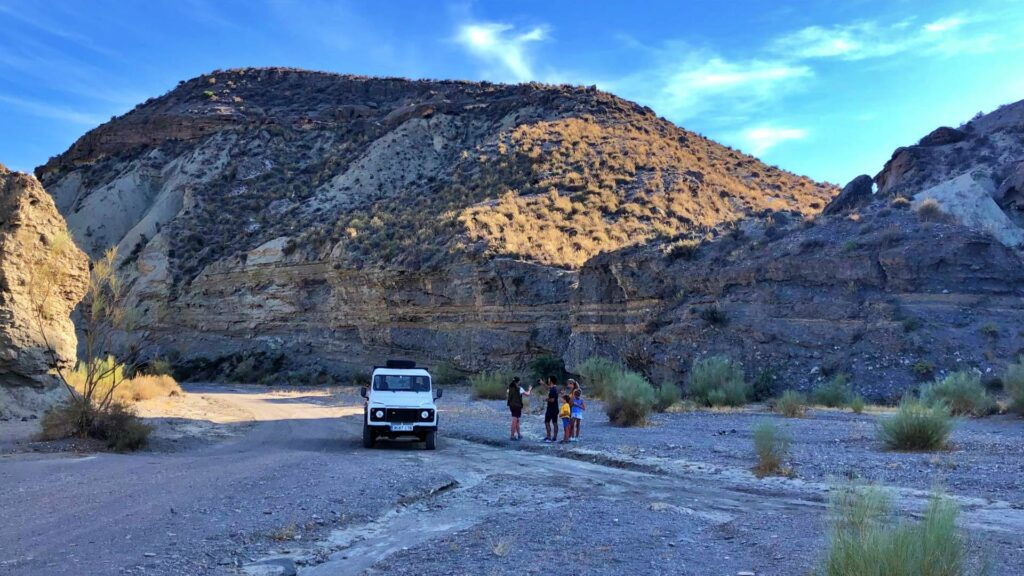
I didn’t mention it at all before, but Almeria has something very unique to coastal Spain and even Europe. Almeria has Europe’s only semi-desert, the Tabernas Desert. It’s about 30 km north of the city and looks like the American Old West. That’s why between 1960 and 1970, Taberna (and other places around Almeria ) was used in over 150 movies. The desert looks very similar to Arizona or New Mexico. “A Fistful of Dollars,” “For a Few Dollars More,” “The Good, the Bad and the Ugly,” and “Once Upon a Time in the West” were all filmed here. Clint Eastwood, Lee Van Cleef, and Henry Fonda all rode horses across this desert. For example, you can visit exactly where “The Good, the Bad, and the Ugly” was filmed if you go to Fort Bravo. It’s an active film set and is open to people visiting around. It’s a bit far out from Almeria city (like 30km), you need either a car or an organized tour.
Oasys Mini Hollywood
Oasys Mini Hollywood is the main themed attraction, an actual Western town set that was constructed for filming, and they kept it open to visitors. You can watch live cowboy stunt shows, see bank robbery re-enactments, try horseback riding, and grab a drink in an authentic-looking saloon. It’s good for either film buffs or families. It’s like mini–Western Disneyland.
Cabo de Gata-Níjar Natural Park: Spain’s Hidden Coast
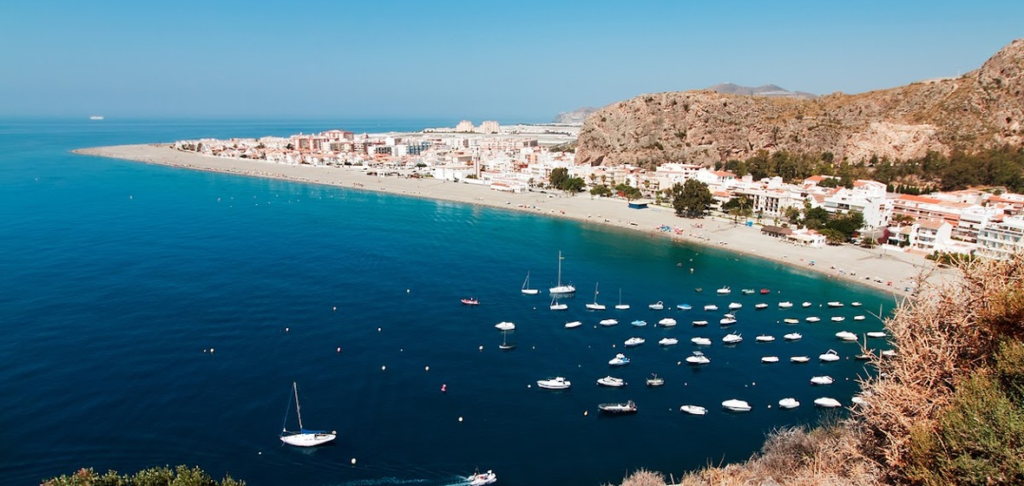
Just 45 minutes south of Almeria city is Cabo de Gata-Níjar, Spain’s first maritime-terrestrial national park. It’s a protected stretch of coast with cliffs, coves, and pristine waters. Really nice for a day visit, starting with breakfast and ending with dinner in nearby villages and beaches. The park has several villages and beaches:
- Agua Amarga: A fishing village with a long pebble beach, calm waters perfect for swimming, and excellent seafood restaurants overlooking the sea. It’s family-friendly and accessible.
- San José: A smaller, more rugged village with access to coastal hiking trails and coves reachable only by foot or boat.
- Isleta del Moro: Charming, almost untouched fishing village with a crescent beach and a handful of simple restaurants serving fresh fish.
- Carboneras: Another working fishing village with beach bars and authentic paella restaurants.
- Cabo de Gata Lighthouse: The iconic lighthouse at the cape’s tip is on a cliff and is the park’s most recognizable landmark.
What makes Cabo de Gata special is the absence of mass tourism. There are not a lot of tourists, and the infrastructure is also not built for that, no resorts or packed touristy beaches. There are usually families swimming, fishermen mending nets, and small restaurants where the catch of the day is still a thing. In addition to swimming, you can snorkel, dive in protected reefs (with guides/tours), hike nice coastal trails, and kayak.
Almeria’s Beaches
If you want to go to Almeria for a calm beach holiday and not travel, you can do that, too. There are some nice, calm beaches. If you travel (like I mentioned above) for a day trip or so, you can get to more beaches. First and the main beach in Almeria is Almeria City Beach. It’s a long, wide stretch of sand with facilities (showers, beach bars, lifeguards). It’s convenient and clean, perfect if you’re basing yourself in the city and want a quick swim.
A bit further from the city but still reachable with public transportation, there are the El Cable Area and El Cable beach. This one is unique because it has the English Cable, an industrial heritage left from the 19th century. It’s a mineral-loading dock designed by Gustave Eiffel. You can see it from the beach, which adds an interesting vibe.
Lastly, Las Almadrabillas Park is a good combination of park and beach. It’s a park with a scenic hilltop, so it’s great for picnicking with the sea views, exploring the area, and then going for a swim. The water is crystal clear year-round, suitable for swimming from May through October (and possible in winter if you’re hardy).
Museums, Historical Sites & Unique Attractions
I’ve mentioned the big hitters and must-sees in and around Almeria, including beaches and some activities. But there are a few other spots that are a bit hidden and worth the time if you have a longer trip to Almeria. Just quickly going through them:
- Castillo de San Cristóbal: Another hilltop fortress with city views, less crowded than the Alcazaba.
- Museo Refugio: Underground air raid shelters from the Spanish Civil War era, eerie and historically significant. It says it’s temporarily closed as of 16 February 2026. Double-check before you go.
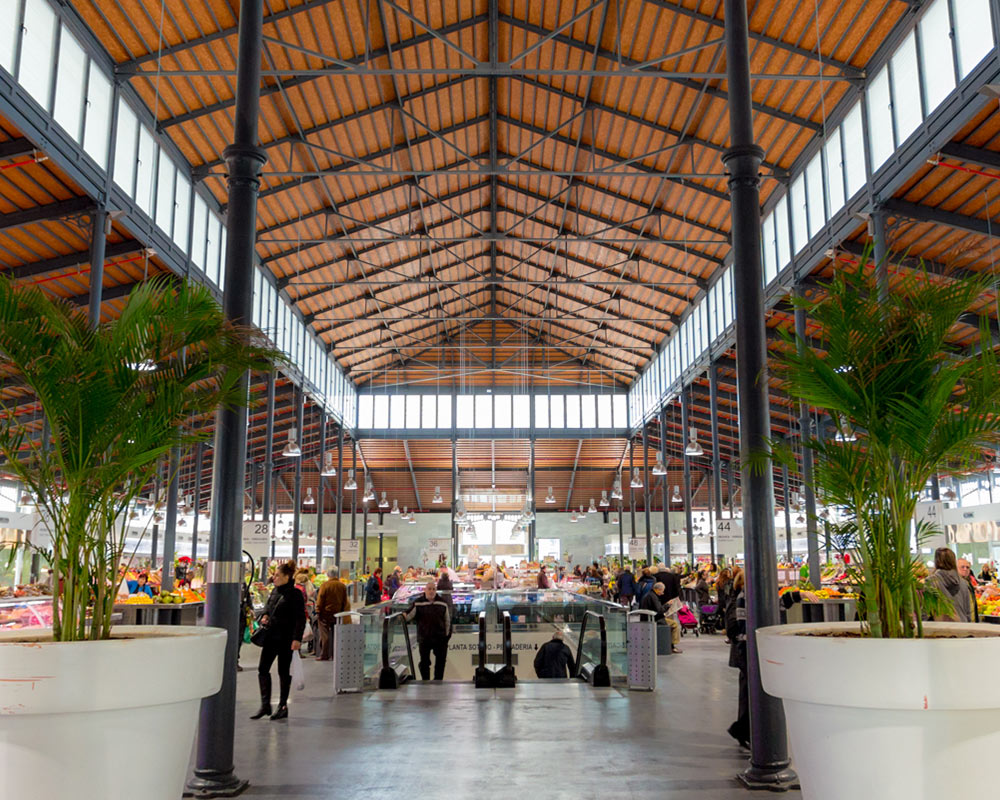
- Central Market (Mercado Central): A stunning 19th-century iron structure filled with local vendors selling fresh fish, produce, spices, and prepared foods. You have to visit this market, like in most Spanish and Portuguese cities.
- Arab Baths (Hammam Alandalus): Relax in traditional pools and steam rooms reflecting Almeria’s Moorish heritage. Perfect for unwinding after fortress climbing.
- John Lennon Statue: A quirky pop-culture moment in a small plaza. Lennon visited Almeria during the filming of “Help!” in 1965.
Activities & Adventures
Beyond the sightseeing, there are many other things you can do in Almeria. They are primarily fun activities and adventures you can do either as a group or by yourself, by renting whatever the activity needs. This is one of the best parts that I like about Almeria. You can do so much in a small city, and you don’t have to feel rushed to book spots because there are usually areas without crowds. Some of these activities:
- Hiking & Nature Walks: Most of the areas I mentioned, where you can take a day trip, have really good hiking trails, too. For example, the best one is the coastal trails in Cabo de Gata. They connect villages and hidden coves. You can walk in between them. Tabernas also has desert trails.
- 4×4 Desert Excursions: This one is best at Tabernas. Either rent a 4×4 or sign up for a group trip at websites like GetYourGuide and just ride around.
- Water Sports: You can kayak and snorkel in certain reserves, beaches, and coves. Some areas may need you to be with licensed people, so take a look at those, but there are many group offers you can simply tag along with.
- Film Location Tours: Organized tours take you to actual “Good, Bad and Ugly” shooting locations and explain the cinema history.
Conclusion
Almeria, Spain is a not so popular small town in Andalusia. People usually go here for a day trip from Malaga or Seville but I think it deserves at least three days. I mean you can spend at least a day in Europe’s only desert, Tabernas Desert. You can see where over 150 movies where shot, go to the Alcazaba fortress for a wine over a beautiful sunset, hike a coastal trail, and spare a day for just the beaches. You may even stay for longer than three days. They say five is ideal for such a small town. But I have to warn you that you should go here if you like activities and adventures. There are opportunities to swim, hike, snorkel, take group tours, and many more. Options to just sit and not do much is limited.
FAQ
What is the best time of year to visit Almeria?
The best time to visit is during the spring (March to May) or fall (September to October). The weather is warm, the beaches are a bit calmer, and some must-sees in Almeria, like the Tabernas Desert, are easier to see without the intense summer heat. Prices are also cheaper, and there aren’t as many queues.
How many days are enough to see the main attractions in Almeria?
Ideally, three days should cover the crucial things to do in Almeria, Spain. If you want to explore the area and the surrounding villages, hidden spots, and enjoy the city, aim for five to seven days. You can go beyond the fortress and relax on most of the beaches, take a day trip to Cabo de Gata Natural Park, and visit the unique places.
What are the best ways to get around in Almeria and the surrounding region?
Within Almeria City, you can simply walk everywhere. It’s a very small city and extremely walkable. For further things to do in Almeria Spain like the natural park, desert, or the day trips, you can either rent a cart or take bus tours. I’d suggest the car option, it’s much more convenient if you want to do everything what to do in Almeria Spain.