Seville is on your Europe travel itinerary. Great choice. But how do you actually spend your days there without rushing or wasting time? Five days is the sweet spot, enough to hit every landmark, eat your way through the tapas scene, and still squeeze in a day trip within Andalusia. You can create the 5 day Seville itinerary that covers it all but you need to know what you are looking for. You can easily fill a week, and even a month in Seville. The city is just more than the must-see spots, there is a lot of activities like good hiking or day trips. It’s about picking what you want to see and do.
Have less time in your hands? Check my 3 day Seville travel itinerary. More time? See the 7 day Seville itinerary.
Seville isn’t the kind of city you rush through. It’s not just about checking off the Cathedral and Alcázar and calling it a day. This place deserves a little breathing room. With five days, you can hit all the big-ticket stuff, discover tucked-away tapas bars, catch a flamenco show that gives you goosebumps, and maybe even squeeze in a day trip or two. A 5 day Seville itinerary strikes the perfect balance for everything. It lets you soak in the city’s rich history, vibrant culture, and irresistible charm. Once one of Spain’s wealthiest cities during the Age of Discovery, you have the chance to create a fun itinerary for you. If you are a first-time visitor, check my Seville travel guide to see all the details. I’ll give you an example 5 day Seville itinerary. You can use it as is or change things around with my tips on seeing Seville. It’s up to you.
Essential Travel Planning Tips for Seville
Before going into the day-by-day 5 Day Seville travel itinerary, I want to give a few tips, tricks, and thoughts on planning your trip. Mostly because things like when to visit, booking your tickets, getting around the city, and similar things are important. You can change around your Seville itinerary based on these. A little planning goes a long way in a sun-drenched city and siesta-loving city. These quick tips will save you from sweating through your jeans or wandering aimlessly while hunting down your next tapas fix.
Best Time to Visit Seville
You have to know that Seville is the hottest city in continental Europe. It goes as high as 40-45 degrees Celcius in summer. That’s very hot. You need to pick the timing well if you want to enjoy your time. Spring (March to May) and fall (September to November) are the best times to visit Seville. These seasons have mild temperatures, which are ideal for exploring. Winter is also fun – a bit colder, though. I definitely don’t recommend summer if you want to explore the city on foot. If you’re visiting in spring, be aware that Semana Santa and Feria de Abril bring huge crowds and higher prices, most places are sold out or 3x the price but they’re also two of Spain’s most spectacular festivals. It’s worth it but you need to plan way early. Events like these (there are a few others) can affect your time quite a lot. If you are still not sure, see my best time to visit Seville article to get more details.
Getting Around the City
Seville is walkable, actually walkable. Most major attractions are close to each other in the old town. Iconic spots like Real Alcázar and Seville Cathedral are extremely close, five minutes walking distance. But if you want to go a bit farther than downtown or if you are getting tired, public transport system works quite well. Trams, buses, and a metro go almost everywhere. A single TUSSAM bus ticket costs around €1.40. A 1-day travel card is ~€5. You can also rent bikes if you wish, Seville is one of Europe’s most cycling-friendly cities. Definitely recommend renting a bike and spending one day on a bike. Sevici is Seville’s city bike-share. A 3-day tourist pass costs around €13.50 and gives you unlimited 2-hour rides. Just watch out for cobblestones unless you enjoy unintentional acrobatics. If you’re feeling extra lazy, taxis and Uber are everywhere and are pretty affordable.
Getting to Seville is also pretty easy. Since the city is a big one, the airport connects well internationally, most budget and premium airlines fly directly into Seville. From within Europe, almost every capital and major city has a direct connection. From over the seas, you’ll either get seasonal direct connections or one layover from Madrid. You may even land to Madrid and take a high-speed train to Seville which takes about 2-2.5 hours.

5 Day Seville Itinerary: Complete Day-by-Day Guide
Ready with the city, planning, tips, and jumping to the fun part? Here’s the ultimate breakdown of an example 5 day Seville itinerary without feeling like you need a vacation from your vacation. What’s important to remember here is that this is an example. While you can still use this 5 day Seville itinerary step-by-step, I definitely recommend changing things based on what you like. Some people (like me) don’t like going around museums or the most famous sights. Then arrange it accordingly. Let’s go day by day so you don’t miss a beat.
Day 1: Settle in Seville and See Downtown
Your first day will probably be the day that you fly in and check in to your hotel. So, you’ll be tired and lose almost half the day (unless you flew in at night the day before). For your base, Santa Cruz puts you walking distance from everything I will mention in Days 1 and 2. Triana is cheaper and more local. If you are in one of these neighborhoods and you just flew in, you are lucky. Take your first day slow. Drop your bags, grab a café con leche, and ease into that Andalusian rhythm. Your first day should be light but scenic. Start in the historic center around the Cathedral of Seville and the Giralda Tower. Take a stroll through Barrio Santa Cruz. Get lost in its winding streets and soak up the local atmosphere. For lunch, go tapas-hopping. Start with espinacas con garbanzos (spinach and chickpeas) and pair it with a cold cerveza.
In the evening, watch the sun set from the top of Metropol Parasol (costs about 5 Euros), locals call it “Las Setas,” aka The Mushrooms. It’s weird, modern, and perfectly fits this old city. End your night with a flamenco show, a must-see Seville attraction. The price for shows usually range from 25 Euros to up to 90. Shows typically last 1-2 hours, perfect for a short but nice night out.
Day 2: Start with Historic Landmarks
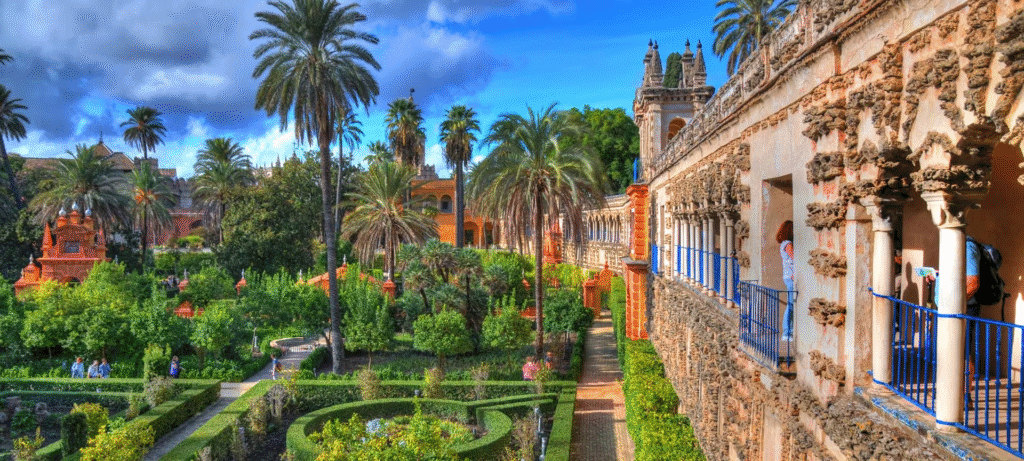
The second day is about going deep into Seville’s history. You’ll dedicate your time to Seville’s iconic and historic landmarks. The first one on the list is the Real Alcázar. Get there early. The line fills up extremely fast. This palace is amazing. Detailed tilework, lush gardens, and Game of Thrones was filmed here! After soaking in the royal glam, head over to Seville Cathedral. It’s the largest Cathedral in the world by floor area and houses the tomb of Christopher Columbus. The scale of this place is wild, don’t skip the choir area or the Treasury. Take a slow lunch nearby in Barrio Santa Cruz. If you’ve still got energy, visit the Archivo General de Indias to see Spain’s colonial history and the entry’s is free, it’s good for budget travelers. Or just go siesta mode. For a deeper dive on what to expect in each of these Seville landmarks, see the Seville landmarks guide.
Author’s tip: Book the Real Alcázar the moment you confirm your travel dates. It sells out faster than any other attraction in Seville.
Day 3: Quick Day Trip from Seville
Today’s going to be outside Seville because the experience of Seville is not just the city itself, Andalusia is a big region and has some amazing places both for cities to see and activities to do in the Andalusia region. You’ve seen enough of Seville for now, time for a change of scenery and a day trip from Seville. It could be anywhere, like with Seville, it depends on what you want to do. Some of the most famous cities are Cordoba, Ronda, Cadiz and Granada. See my full day trips from Seville guide for more options.
Cordoba is the gold standard. By AVE, Cordoba is about 45 minutes and costs ~€12–25 one way. Trains run frequently throughout the day. Start at the Mezquita, a cathedral-mosque hybrid. Then stroll across the Roman Bridge and get some fresh air by the river. Wander through the Jewish Quarter, snack on salmorejo, and pop into a courtyard or two. Cordoba is famous for its patios, and they’re basically a Pinterest board that has come to life. Don’t worry about seeing everything.
Ronda is a city built on top of a cliff, El Tajo gorge and has a deep history of rebels, bandits, and outlaws. It’s also where modern bullfighting was invented. In Ronda, you’ll most likely spend your time either walking around and looking for good viewpoints or going to museums to see the history of the city. Either way, it’s not a big city, you can finish in less than a day. Granada, is another beast. It’s a much bigger city and there is a lot more to do. Alhambra is the most important place to see here.
You can go back to Seville for dinner and some more experiences like the flamenco show on day 1. You can also stay in Cordoba or wherever you went for your day trip, grab dinner, and find an experience. Check out websites like GetYourGuide. They have some good stuff. I used them in Tenerife, and they were super nice.
Day 4: Plaza de Espana, Triana, and Parks
Day 4 will be back in Seville, and it will be a bit calmer than day 2. It’ll be about local exploration, like parks, plazas, and whatnot. Start with Plaza de España. This thing is enormous and absurdly beautiful. Plaza de Espana is free, so it’s one of the best free things to do in Seville if you are visiting Seville on a budget. Rent a rowboat if you’re feeling extra, or just walk the semi-circle and admire all the tiled alcoves representing Spain’s provinces.
Next, head to Parque de María Luisa, right next door. It’s got fountains, pavilions, and parrot chatter echoing in the trees. You can rest a little here with an ice cream and just sit. Cross the Guadalquivir River to Triana, the old gypsy quarter known for flamenco, ceramics, and real-deal tapas. It feels more local. While you’re in Triana, pop into the Mercado de Triana for lunch, the market has fresh produce, local stalls, and €5 plates. Good for budget travelers, again. Walk along Calle Betis after that (this place is also nice to grab lunch bit it will be a bit more expensive) with a riverside view, and if you’re into pottery, visit a few ceramic studios.
For the evening, you can go to a rooftop bar. There are some good ones that have views of the Cathedral or the river. You can use Google Maps to find one that fits your needs. But having a wine in the rooftop bar with the sunset and the Cathedral in the background is amazing. Doña Elvira and EME Catedral Hotel both have rooftop bars with Cathedral views.
Day 5: Rest and enjoy your last day
Last day. Don’t fly back on this day, instead take it slow, no itinerary. Whatever feels right. You’ve done the sights. You’ve walked a lot, saw the must-see landmarks, visited nice places for coffees or lunch. Here are a few things worth having on your radar in case you feel like it and couldn’t come up with a good plan:
- The Hammam Al Ándalus is one of the best hammam spas in Spain. Traditional Moorish bathhouse experience, about €35–45 per person. You should book ahead if you want to try it out, it can fill up especially in summer.
- If you missed the Triana Ceramic Market when you were in Triana in day 4, go back. This morning is your chance. Pick up handmade tiles and painted pottery to bring back home, far better souvenirs than anything sold near the Cathedral.
- For a final lunch, head back to Calle Betis for a riverside table. If you haven’t tried carrillada al vino (slow-braised pork cheek), it s a good food to end the week.
Leave the afternoon free. A last walk along the Guadalquivir, a cold drink in a plaza, people-watching or something else. Goal is to just wind down and don’t think about where to go next. At least this is what I like to do and that’s what I suggest in a city like this.

Must-Visit Historical Landmarks in Seville
Okay, I gave you the 5 day Seville itinerary, but I think there are still a few things that I need to cover. Because as I said, you will change this itinerary based on your preferences and likings. That’s why I should give you a short summary of the important stuff in Seville. Let’s start with the historical landmarks. After all, Seville has a very rich history as the Andalusian capital. You can’t see them all. Pick which one you like.
Royal Alcázar
Royal Alcázar is a UNESCO World Heritage site palace complex. The development of the palace started in the 10th century, so it’s seen in the Islamic era and has Moorish, Gothic, and Renaissance styles in its design. It’s probably the number one thing that you need to see in Seville. It has amazing gardens. You can also recognize this place from Game of Thrones! Many travelers find the gardens more impressive than the palace itself. Give yourself at least 90 minutes
La Giralda
La Giralda is Seville’s most iconic tower. It was originally built as a minaret during the Moorish period and later transformed into the bell tower for the Cathedral. La Giralda is 104 meters tall. So it has some amazing views. But you have to climb the 35 ramps.
Seville Cathedral
Seville Cathedral is massive, gothic, and beautiful. It’s the largest Cathedral in Spain, and it houses the tomb of Christopher Columbus. It’s a true masterpiece of medieval architecture. Construction began in 1403, resulting in over 80 chapels within its vast interior. Entry is €13, or free on Sunday afternoons from 2:30–6pm if you are on a budget. It gets extremely crowded at those times, though.
Plaza de España
Built in 1928 for the Ibero-American World Exposition, Plaza de España is a semi-circular wonder. Its 52 Andalusian tiled benches represent different Spanish provinces. Take a stroll across elegant bridges or rent a rowboat to glide along the plaza’s canal. Hands down, it is one of the prettiest places in Spain. Perfect for pics, strolls, and pretending you’re in a period drama.
Seville Food Guide: What to Eat in Seville
If you came to Spain and didn’t eat like a king, did you even come to Spain? Seville’s food scene is no different than other parts of Spain. Some even say it’s better in Seville than the rest of the country. Seville’s cuisine mixes traditional Andalusian tastes with new cooking styles. Tapas in Seville, for example, are very popular. Any good travel guide will tell you that Seville’s food culture is a must-see, so you have to understand how to taste that food life in Seville.
Best Local Restaurants
Never go to those tourist traps you see downtown. 99% of the time, they will be expensive, their food will not be good, and it won’t be authentic. Seville has many local spots serving real dishes at reasonable prices. My first suggestion is to get lost in the streets away from downtown, and you’ll find great food in hidden alleys. The streets behind Plaza de la Alfalfa have some of the best local spots away from tourist traps. El Rinconcillo (open since 1670) is Seville’s oldest tapas bar. The place is worth a visit for the atmosphere alone. Try to get churro at one of the street food stops or at shops like La Campana. Expect to pay €2–4 per tapa. A full spread for two with wine runs €20–30.
Tapas Crawls in Seville
If you didn’t realize it, tapas are the real deal in Spain. Seville does it well, too. In other countries, there are bar crawls (not that Spain doesn’t have them) but in Seville, you have tapas crawls! Don’t miss out on a tapas crawl in Seville. It’s a fun tradition where you go from bar to bar, trying small dishes with wine or beer. Many walking tours include tapas stops. Pick one at websites like GetYourGuide.
Triana also has a killer tapas scene if you want something a little more local and less tourist packed. Bonus points if you try snails in season or go for some Andalusian-style pork cheek.
Cooking Classes
If you’re really into food and cooking, try joining a cooking class. You can learn how to make paella, different tapas, or any other Spanish food with a local chef. There aren’t a lot of them, but if you do your research well, you can find the good ones. Cooking classes in Seville typically run €60–90 per person and last around 3 hours. You’ll usually cover paella, tapas basics, or traditional Andalusian dishes. GetYourGuide and Airbnb Experiences both list well-reviewed options. You can filter by ‘small group’ for a better experience or use any other filters to match your needs. If you have the time and like cooking (or want to learn certain recipes) it’s a must.
FAQ
Is 5 days enough to explore Seville?
Yes, 5 days is perfect for Seville. You can see the main sights, enjoy local culture, and even go on a day trip. You’ll have time to visit famous places, eat leisurely, and enjoy the city’s vibe without feeling rushed.
What’s the best time to visit Seville?
Spring (March to May) or fall (September to November) is the best time. These seasons have nice weather, fewer people, and beautiful scenery. Spring has blooming orange trees, and autumn has golden light.
How should I get around Seville?
Seville is easy to walk around, with most sights close by. For longer trips, buses and trams work well. Renting a bike is also good, as Seville has bike lanes.
What are the must-visit historical landmarks in Seville?
Must-see spots include the Royal Alcázar, La Giralda, Seville Cathedral, and Plaza de España. They show Seville’s history and stunning buildings.
Are there any good day trips from Seville?
Yes, Córdoba’s Mezquita, Ronda’s Cliffside Town, and Granada’s Alhambra are great day trips. They offer a nice change from Seville’s sights.
Is Seville expensive for tourists?
Seville is more affordable than many European cities. You can find good deals on places to stay and eat, like tapas. While some attractions cost money, there are many free things to see and do. You can check my Seville on a budget guide for that.